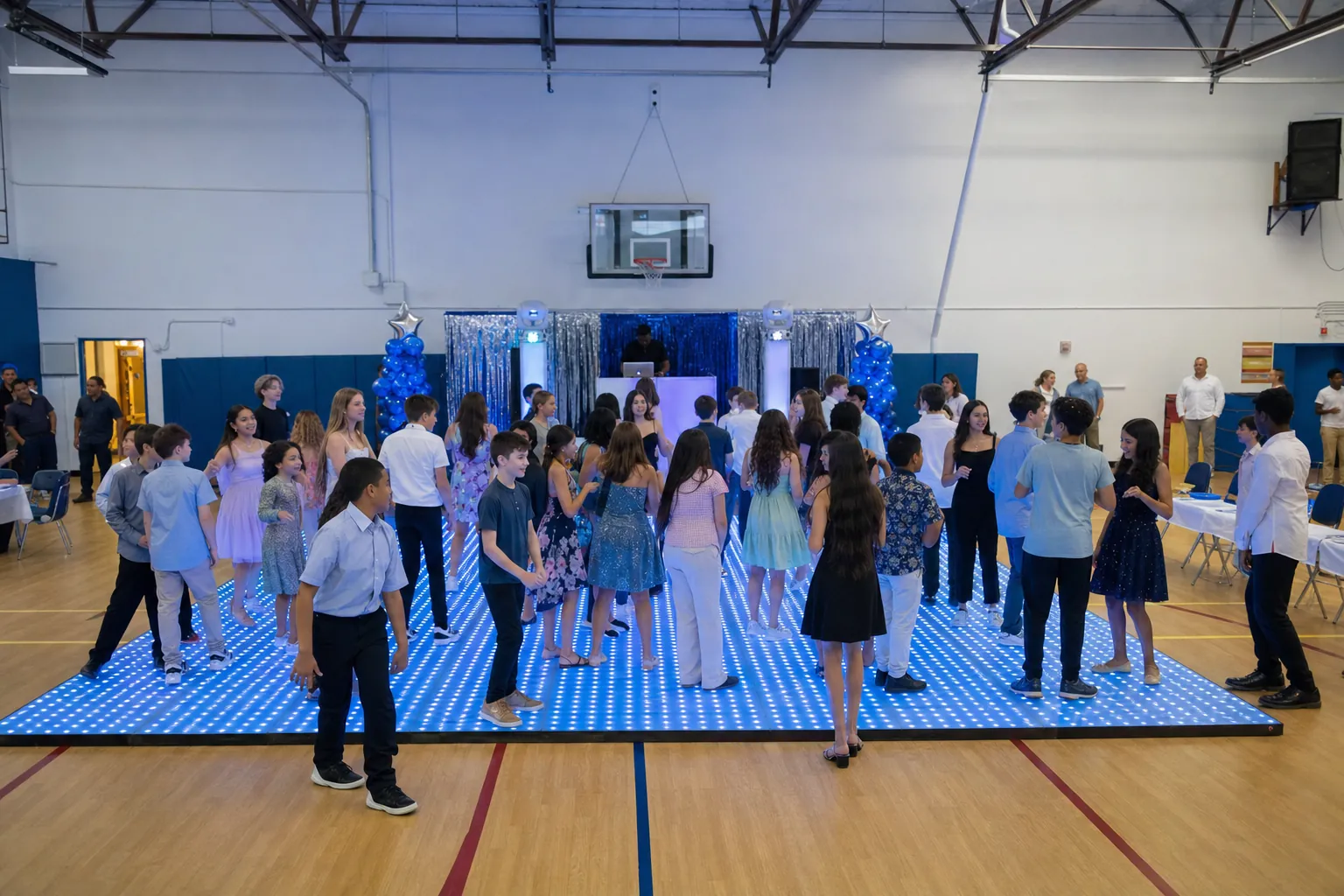
Middle school dances work best when they feel social before they feel like a performance. Students are arriving with different comfort levels. Some are ready to find the dance floor. Some want to stay close to friends, check out the room, or wait until they see what everyone else is doing. A good plan makes all of those first choices feel normal.
That is the real job behind useful middle school dance ideas: build energy without forcing it. Give the room a clear center, make the first ten minutes easy, offer a few optional ways to join in, and protect a place where students can talk or take a break. When the setup does that well, the dance floor becomes an invitation instead of a stage.
1. Start with the social temperature of the group
Middle school is not one audience. A sixth-grade family dance may need an earlier start, obvious adult support, and a room that makes parents feel welcome. An eighth-grade social may need more room for friends to circulate, a student-informed playlist, and fewer activities that feel aimed at younger kids. Before choosing a theme or a list of games, decide what the group is likely to enjoy without feeling put on display.
Ask a few simple questions: Will families attend? Is this a fundraiser, a reward, or a school social? How many students are expected? Is the group used to school events, or does it need a lower-pressure first experience? A one-sentence event goal gives the planning team a filter for every later decision. It is easier to choose music, food, decor, and a dance floor when everyone knows what the night is meant to feel like.
For a fuller planning sequence, use the school dance planning checklist to cover approvals, volunteer roles, room access, and the event schedule before details begin to pile up.
2. Make the entrance do some of the welcoming
The first few minutes are not dead time. They are when students decide whether the event feels comfortable. Avoid an entrance where everyone funnels into a dark gym with no clear next step. Give students a visible check-in point, a friendly volunteer, music they can hear before they enter, and a clear view of where friends are gathering.
A wristband, hand stamp, or simple ticket process can make arrival feel like part of the event. Keep it quick. The goal is not a complicated registration experience. It is to move students from the doorway into the room without a line that feels awkward or a volunteer repeatedly answering where to go next.
The National PTA recommends planning school events with venue requirements, accessibility, and safety in mind. That means making sure entrances, restrooms, exits, and adult support stay easy to find, even after the lights and music change the mood of the room. Its event guidance is a useful starting point for making those practical choices early.

3. Give students more than one place to be
The dance area should be the center of energy, but it should not be the only place that matters. When the room gives students a few simple choices, it fills in more naturally and feels less intimidating. A student can arrive, take a photo with friends, grab water, watch the dance floor for a minute, and join when ready. That is a far easier path than asking everyone to walk directly into the middle of a crowd.
- Dance zone: Put it where students can see it from the entrance, with open space around the edge for people who want to watch before joining.
- Photo zone: Use a simple backdrop or themed corner with enough light for phone photos and room for a short line.
- Social zone: Add a few chairs, benches, or standing tables away from the speakers so friends can talk without leaving the gym.
- Refreshment zone: Keep snacks and water outside the dance path, with a clear line and trash nearby.
Clear zones also make the event easier to supervise. Volunteers can see where groups are forming, keep the busiest routes open, and answer questions without needing to police every corner of the room. The school dance decorations guide shows how a few repeated colors and a clear room plan can make those zones feel like one event rather than separate stations.

4. Use a theme students can understand in one sentence
A theme is helpful when it gives the room an easy visual direction. It is not helpful when it creates a costume requirement, a long shopping list, or an inside joke half the students will not understand. Middle school groups usually respond better to a clear invitation than a complicated concept.
Glow night, school colors, winter lights, a sneaker ball, or a black-and-white dance can all work because students immediately know the mood. Keep the theme broad enough for people to participate at their own level. One student might wear school colors, another might simply enjoy the lights and music. Both should feel like they belong there.
The school dance themes guide offers more ideas and helps sort out what can realistically work in a gym, cafeteria, or multipurpose room. Once the theme is set, use it at the entrance, photo area, and dance zone. Repeating a few details will look more polished than trying to decorate every wall.
5. Plan short shared moments, then get out of the way
Students do not need a packed program. They need a few easy invitations that break the ice. A familiar group dance, a song-request prompt, a short photo challenge, a raffle drawing, or a birthday shout-out can lift the room for a few minutes. Then let the music return to normal and give students room to decide what they want to do next.
The best activities can be understood from the edge of the room. Someone watches for ten seconds, recognizes what is happening, and can join without having to know a routine or be singled out. That is why a short group song often works better than a long competition. It gives people a reason to move together without making the most outgoing students the only ones having fun.
Keep the activity lead briefed before the event: what happens first, what is optional, when the music shifts, and how to move on if the room is already lively. For more low-pressure activity ideas, the school dance ideas guide covers photo moments, social space, music rhythm, and group participation.

6. Build the music in stages
An empty dance floor at the beginning is normal. Students often need time to arrive, find friends, and see how the room feels. Start with music that is recognizable and upbeat without making the first song feel like a test. Open the photo area and social zones right away. Let groups gather naturally before asking the whole room to join a big shared moment.
After the room warms up, bring in a familiar group song or a quick student-request set. Later, use another short shared moment to lift energy after snacks or photos. A simple rhythm works better than a rigid schedule because it leaves room for the group to tell you what it needs. If students are already dancing, protect that momentum. If they are mostly talking, give them a low-pressure reason to cross the floor together.
Get a small amount of student input before the event. A short request form or a conversation with a student council group can surface songs, themes, and activities that feel current to the audience. Adults still need to set the boundaries and choose what is appropriate for the school, but students are far more likely to recognize themselves in an event when they helped shape a few parts of it.
Ask the school what music rules apply and give the DJ, playlist lead, or student committee clear boundaries before event night. The best playlist feels easy in the room because the practical decisions were made before the first song.
7. Make comfort and inclusion part of the plan
Not every student wants to dance in the middle of the floor, and that does not mean the event has failed. A welcoming middle school dance gives people a way to be present at different levels. Some will dance all night. Some will take photos, sit with friends, help at a table, or join only the familiar group songs. Those are all real ways to participate.
The Centers for Disease Control and Prevention describes school connectedness as students feeling that adults and peers care about them and that they belong at school. Its school connectedness resources are a useful reminder that small choices in event design matter: a clear route, an adult who is easy to approach, a place to take a break, and activities that do not require students to compete for attention.
Keep exits and restrooms visible, manage cables and equipment, and use lighting that creates atmosphere without making the room hard to navigate. Put adult support where decisions happen: check-in, the dance edge, refreshments, the photo line, and the exit. That structure lets students enjoy more freedom because they know help is nearby when they need it.
Set the tone in the invitation as well. State the date, time, pickup details, dress expectations, and what students can expect in plain language. Avoid language that makes the event sound like it is only for confident dancers or people who arrive with a group. A clear, welcoming invitation lowers uncertainty before students even walk through the door.
8. Let the dance floor make the room feel like an event
An LED dance floor gives a middle school dance a bright, obvious gathering point. It makes a plain gym look different the moment students walk in, gives the music a visual center, and creates a backdrop for the group photos families remember. It also helps students who are unsure where to start because the room has a clear place where the energy is happening.
The key is to plan the floor as part of the room, not as something squeezed in after tables, snacks, and activities are already fixed. Consider the entrance, guest count, seating, photo area, DJ location, exits, and the space students need around the edge to watch or join. The site’s floor size guide is a useful first step for comparing footprints before the layout becomes final.
Led Dance Floors Dallas helps schools match the floor to the venue, schedule, guest count, and access plan. The Dallas LED dance floor rental page explains what to have ready, and the availability request is the next step once the date and venue are in place.
Middle school dance checklist
Before students arrive, make sure the team can answer these questions:
- What should a student feel in the first five minutes after walking in?
- Where are check-in, dancing, photos, refreshments, and a quieter social space?
- Which two or three optional activities can students join without being singled out?
- Who is responsible for entry, music, the photo line, refreshments, and closing?
- Are exits, restrooms, walking routes, and adult help still easy to find?
- Does the dance floor have enough room around it for students to watch, join, and circulate?
The strongest middle school dance is not the one with the most activities or decorations. It is the one where students can walk in, find their people, see what to do next, and feel comfortable becoming part of the night.
Frequently asked questions
What makes a middle school dance fun?
A fun middle school dance gives students several easy ways to take part. Start with a clear arrival, music that builds gradually, a visible dance area, a photo moment, and somewhere friends can talk without leaving the event. The goal is not to make every student dance immediately. It is to make joining feel comfortable.
What activities work at a middle school dance?
Short, familiar activities work best: a group dance, song-request prompt, themed photo challenge, raffle drawing, or quick shout-out. Keep each one brief and optional, then return to open music and social time. Activities should invite students in rather than put anyone on the spot.
How long should a middle school dance last?
A two-hour event is often enough time for students to arrive, settle in, enjoy a few shared moments, and leave while the energy is still good. The right length depends on the school schedule, supervision plan, transportation, and whether families are part of the event.
How do you keep a middle school dance organized?
Give the room distinct zones for check-in, dancing, photos, refreshments, and a quieter social space. Assign adults and volunteers to the places where students naturally need help, keep walking routes clear, and agree on the opening and closing plan before doors open.
Related posts
SCHOOL EVENT PLANNING
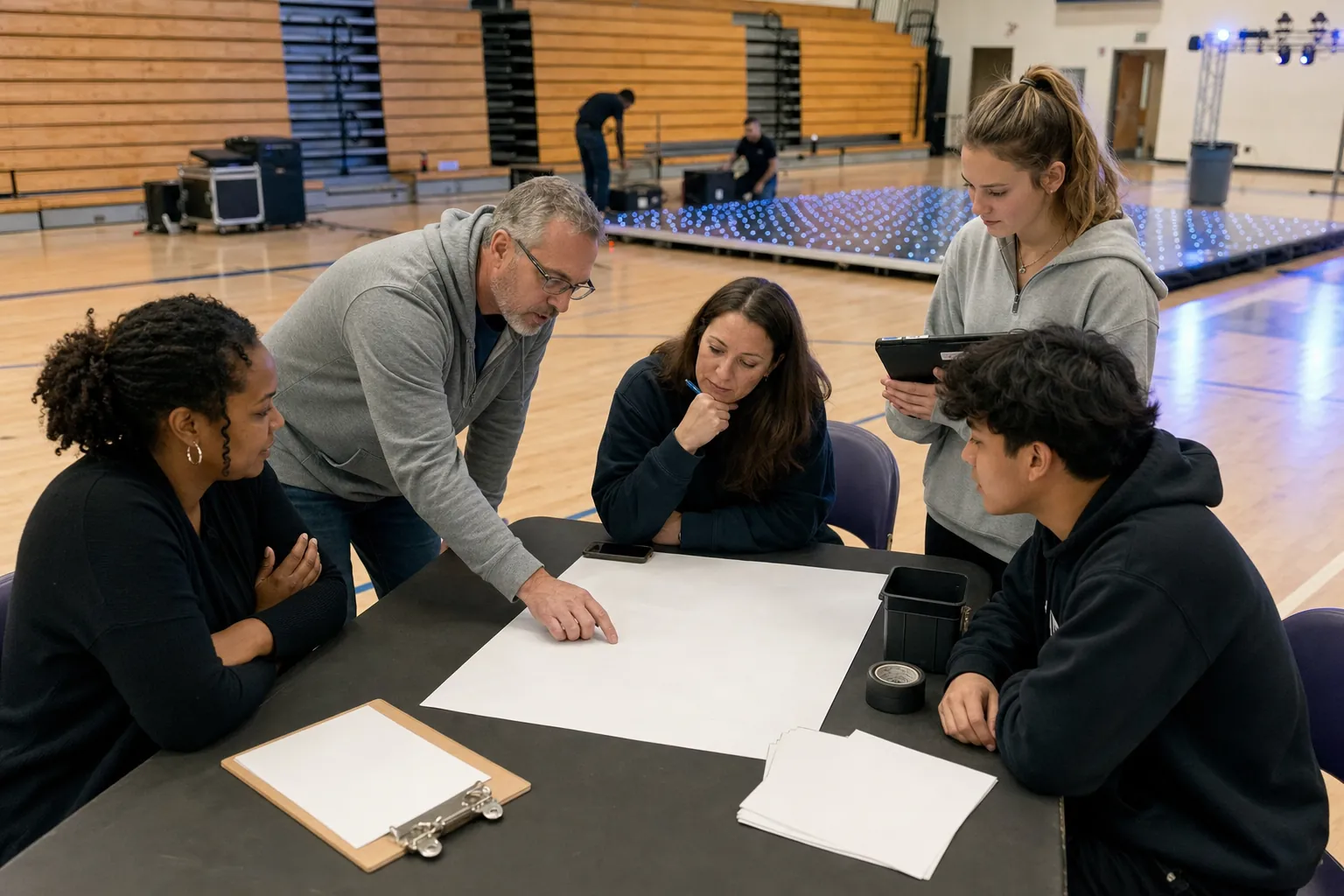
How to Plan a School Dance: A Practical Checklist
Build a clear plan for the venue, budget, room flow, volunteers, program, and a dance night students want to join.
Read the guide ↗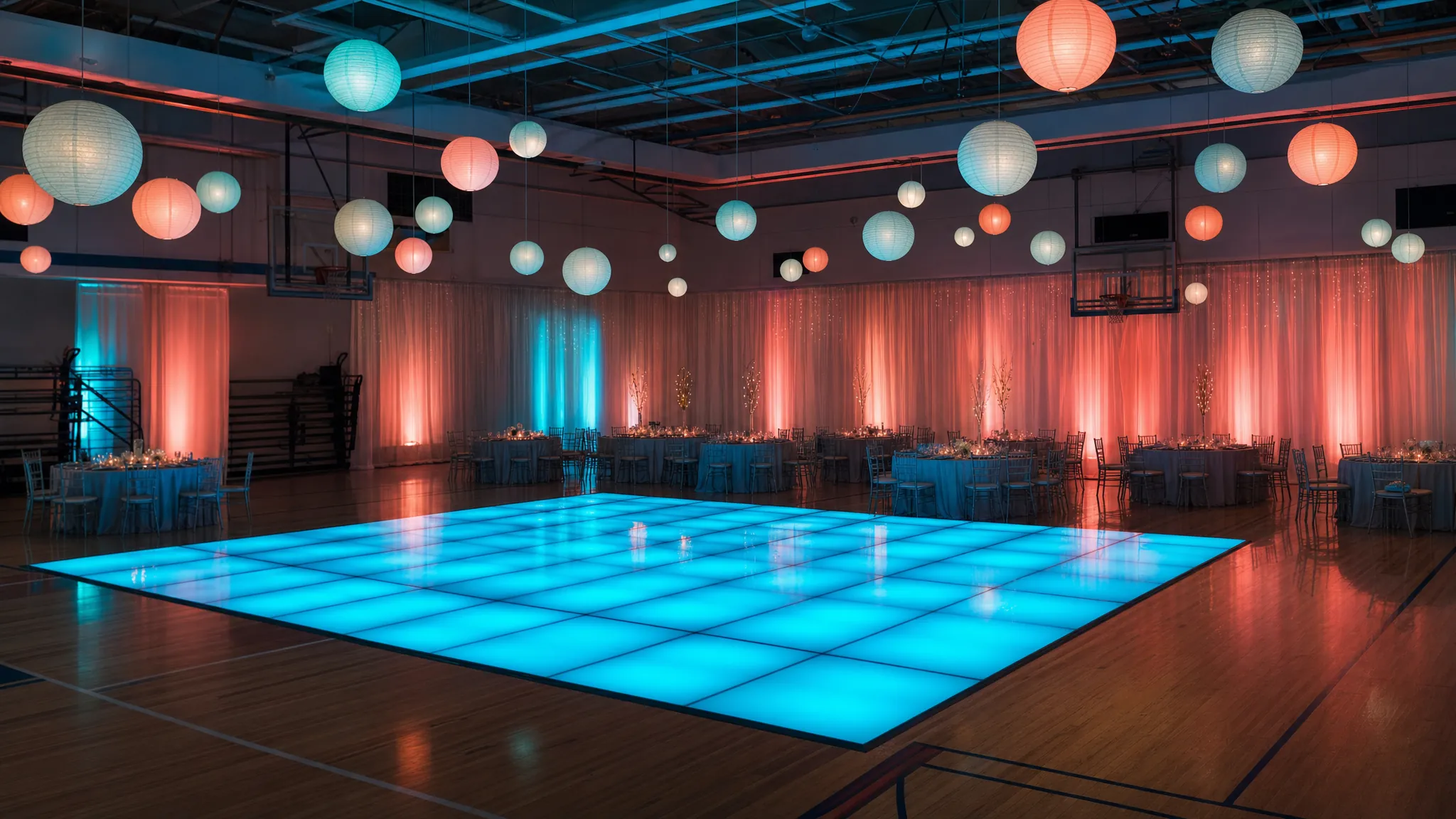
SCHOOL EVENT PLANNING
School Dance Themes: Ideas That Fill the Floor
Choose a school dance theme, make the room work around it, and plan a welcoming night students want to join.
Read the guide ↗