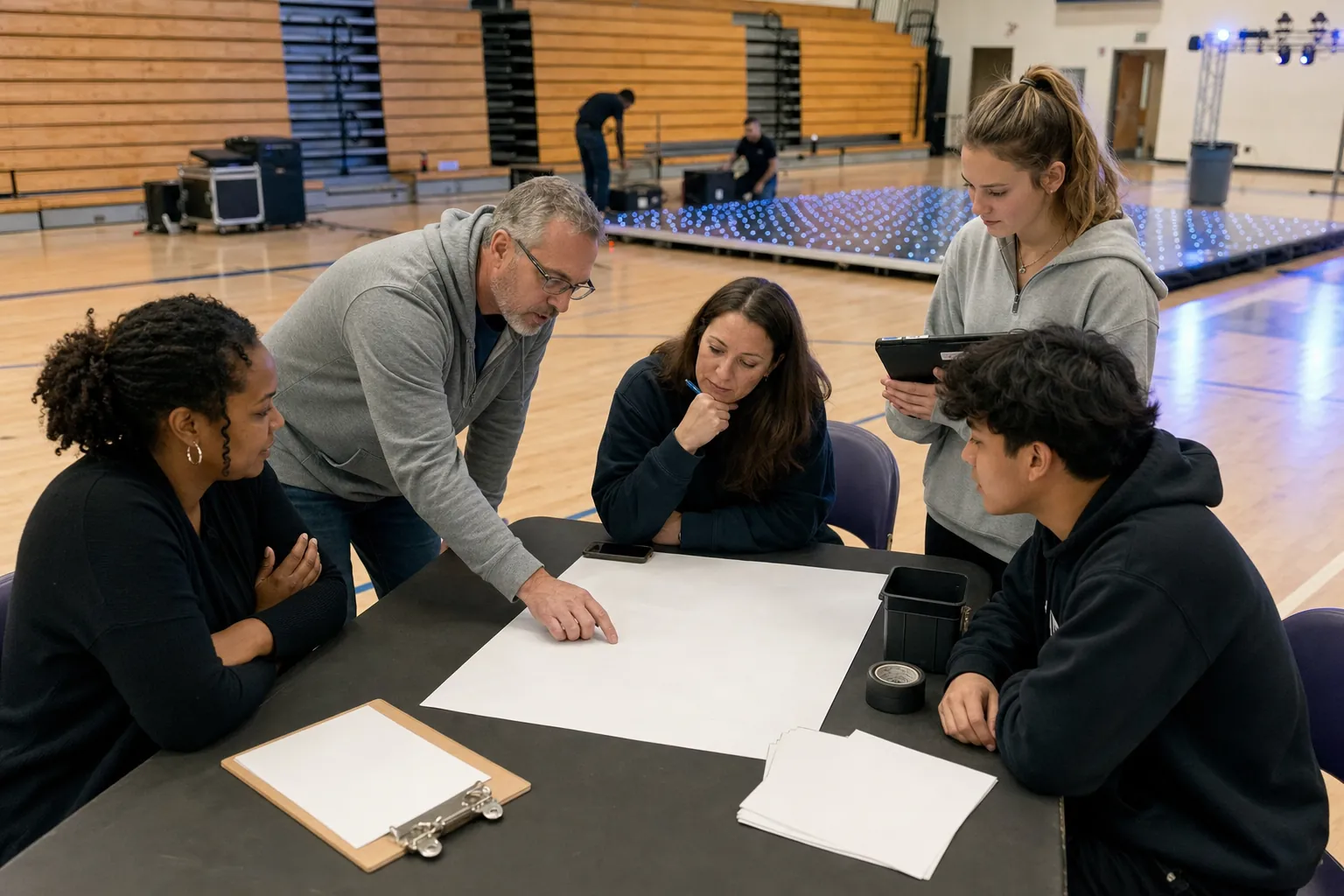
Planning a school dance is less about finding the perfect decoration and more about making practical choices in the right order. Who is the event for? What needs approval? Where will guests arrive? What can they do when they are not dancing? Who is responsible when the music starts, the line forms, or a parent has a question?
When those answers are clear, the theme, lighting, music, and photo moments become much easier to choose. This guide is built for school organizers, parent groups, student councils, and volunteers who want a dance to feel exciting without becoming a last-minute scramble.
1. Start with the event you are actually creating
Before anyone buys supplies, agree on the job the dance needs to do. A family dance, a middle-school social, a high-school formal, and a fundraising glow night each need different levels of supervision, programming, price point, and guest participation. A clear one-sentence goal keeps the team from building an event that tries to please everyone and ends up feeling scattered.
Write down the age group, expected attendance, venue, date window, event length, and whether families will attend. Then decide the first feeling guests should have when they enter. Maybe it is polished and dressy. Maybe it is bright, social, and low-pressure. Maybe it is a fundraiser that needs a full room and simple volunteer jobs. That choice should shape the rest of the plan.
For a theme-led event, begin with the school dance themes guide. A theme is useful when it gives the room a visual direction and makes decisions easier. It is not useful when it creates a costume requirement, a long shopping list, or more work for the people already running check-in.
2. Get approvals and venue details first
Confirm the venue before you promise an experience. Ask what time the room is available, where guests can enter, which doors and restrooms will be open, what equipment is already on site, and what needs special approval. Find out whether the school has rules for food, ticket sales, music volume, lighting, security, student pickup, or outside vendors.
Walk the room with the event in mind, not just as an empty gym or cafeteria. Look at the entrance, parking or drop-off, check-in area, bathrooms, exits, power access, speaker locations, tables, and the routes people will use all evening. The National PTA's event-planning guidance is a useful reminder to consider venue requirements, accessibility, and safety as part of the event plan rather than cleanup work for the final week.
Keep a single shared list of requirements and questions. This is where small details stop becoming surprises: whether lights can be dimmed, whether a loading path is available, whether the floor needs protection, and who has the key when volunteers arrive.
3. Give every decision an owner
A short planning meeting can create a long list of jobs. The mistake is leaving those jobs in the air. Keep the working group compact, then give each major area one person who is responsible for moving it forward. That does not mean they do everything. It means everyone knows where a decision lives.
- Event lead: keeps the timeline, approval questions, and final decisions moving.
- Venue and setup lead: owns the room plan, access times, tables, power, and vendor coordination.
- Guest experience lead: handles theme details, music, activities, photo moments, and communication.
- Entry and volunteer lead: plans check-in, staffing, supervision, and the closing process.
- Budget lead: tracks what is approved, purchased, donated, and still needed.
Bring a simple agenda to every check-in: decisions needed, items due before the next meeting, and risks that need an answer. Do not use committee time to debate every decoration. Use it to remove blockers around approval, staffing, access, payment, communication, and safety.
4. Build the budget around the guest experience
Start with a maximum amount and divide it into a few useful buckets. The biggest share usually belongs to the main experience, such as music, lighting, a dance floor, or a centerpiece photo moment. The next bucket covers guest participation: wristbands, simple activities, signage, or a small photo setup. The final bucket protects practical needs such as check-in supplies, volunteer meals, venue requirements, and contingency items.
Spend first on what a guest will genuinely notice. An organized arrival, a room that looks intentional, music that has a plan, and a place people want to gather matter more than lots of unrelated props. For a glow night, the glow party planning guide can help the team choose a few high-impact details instead of trying to fill every wall and table.
Keep the budget visible. List the item, estimated cost, final cost, person responsible, and deadline. That makes it easy to see whether the plan is gaining energy or quietly adding expenses, and gives next year's committee a better starting point.
5. Draw the guest journey before you place decorations
The strongest school dances have a clear flow. Guests should know where to go when they arrive, where the main energy is, where to get a drink or snack, where to take a break, and how to leave. Map that path before setting up a backdrop or moving in tables. A nice-looking room can still feel frustrating when the entry line blocks the only exit or the snack table cuts through the dance area.
Start with the essentials: entry, check-in, restrooms, exits, food, dance space, photo area, seating, and any activity stations. Keep walking routes wide and obvious. Put food and drinks outside the dance zone. Avoid placing a photo wall where a line will cross the entrance. Keep one calmer seating area far enough from the speakers for conversation and breaks.
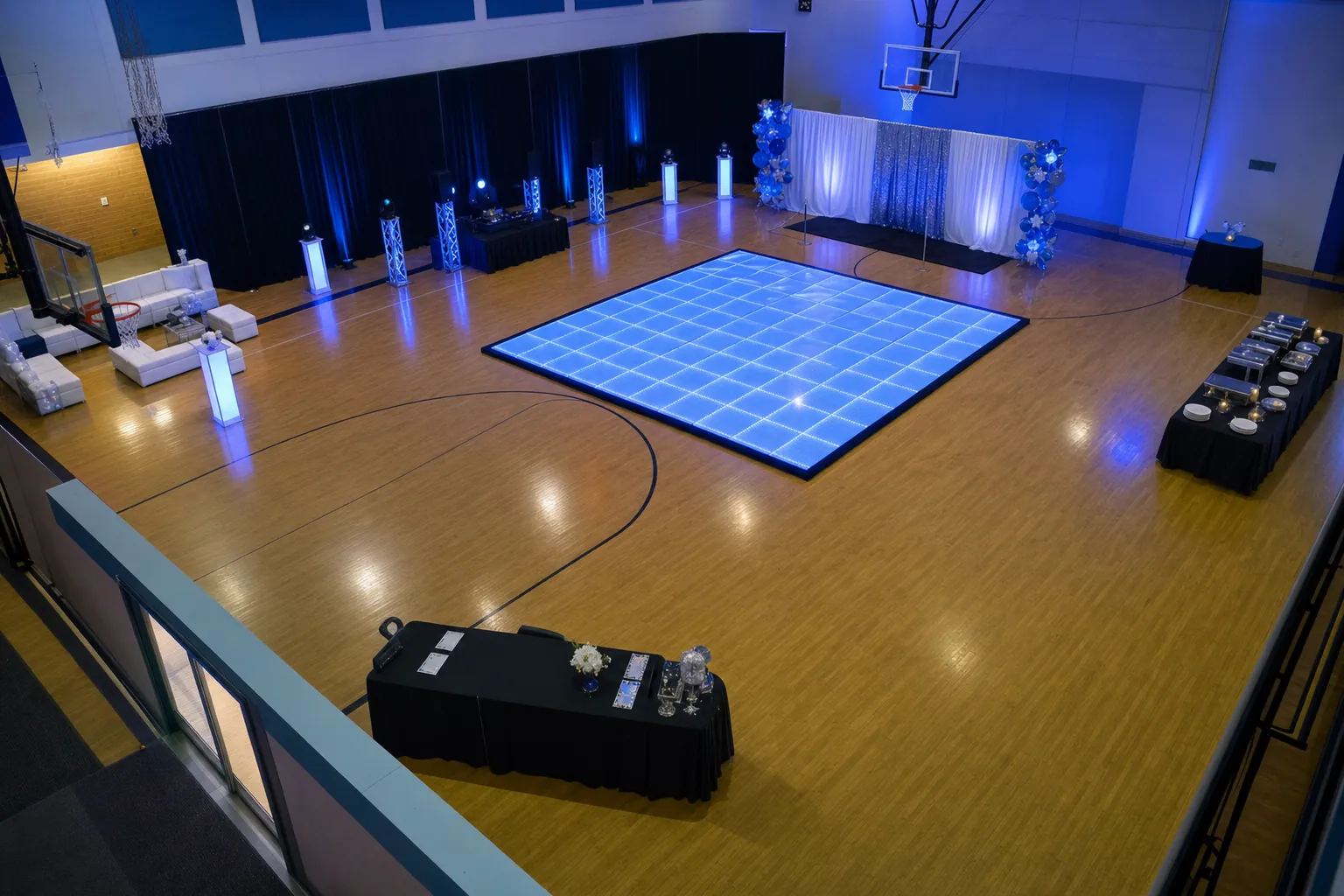
The dance floor is usually the room's center of gravity. Place it where guests can see it from the entrance, then build the rest of the setup around the movement it creates. Review the LED floor size options while you sketch the layout so the floor fits the guest count without pinching the routes around it.
6. Make the first ten minutes feel easy
Arrival sets the tone. If students walk into a confusing line, a dark hallway, or an unstaffed table, the event begins with uncertainty. Give the entry its own plan: where guests wait, who checks them in, what they receive, where questions go, and what they see next. A simple wristband, ticket scan, or hand stamp can be enough when the process is clear.
Make the room's focal point visible from the door. That may be the dance floor, a photo backdrop, or a bright wash of color. The goal is not to overwhelm people. It is to make the first decision obvious: check in here, then head that way. Keep the check-in team informed about the event schedule, student pickup process, and who to contact when they need help.
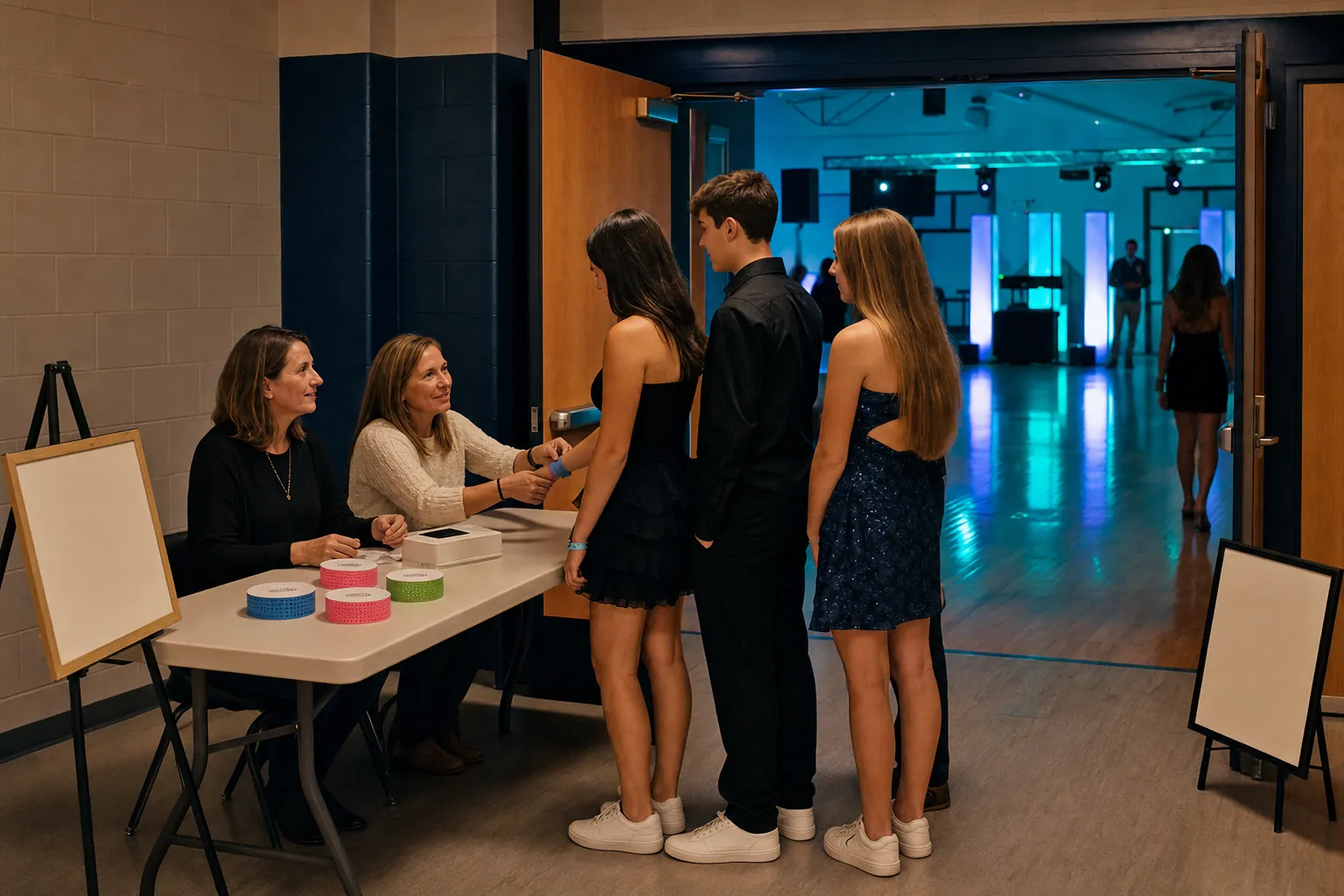
Use invitations and reminders to make arrival even easier. State the time, location, entry process, what students should bring, any dress expectations, and the pickup plan in plain language. People are more likely to arrive ready when they do not have to interpret the basics on the way to the event.
7. Plan a program that leaves room to choose
A school dance does not need a minute-by-minute show, but it does need a rhythm. Plan a welcoming arrival window, an active middle stretch, one or two easy group moments, and a clear closing. That is enough structure to keep the room moving without forcing guests through a schedule they did not come for.
Give students more than one way to participate. Alongside the dance area, offer a photo moment, a small activity, or a quiet social space. A glow bracelet station, low-pressure game, or themed message wall can help people join the event before they are ready to dance. The best activities are easy to understand in a few seconds and do not require a volunteer to explain them all night.
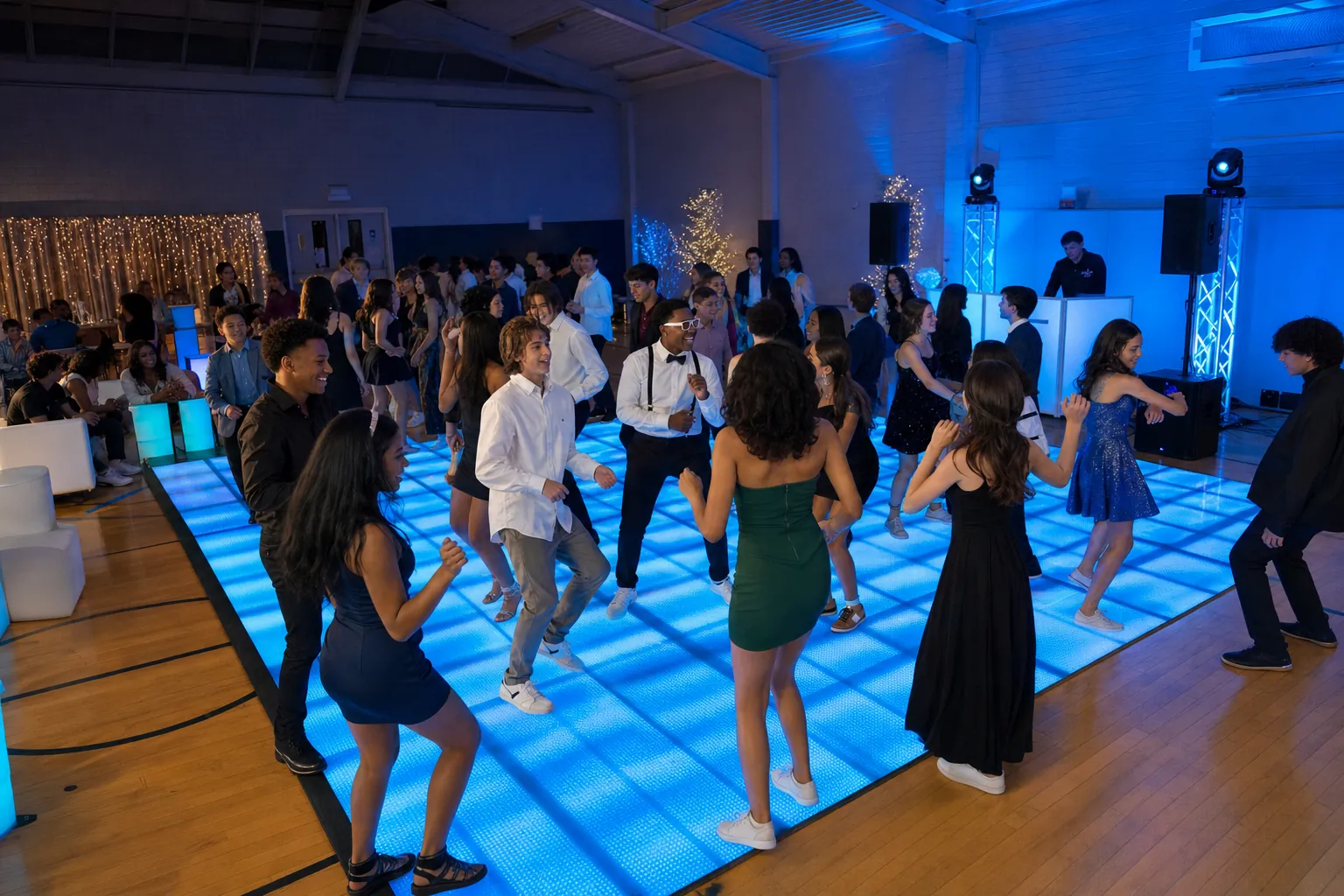
For the dance itself, start with familiar music and an easy group moment rather than a high-pressure contest. Build energy in stages. A short request block, a themed song run, or a dance challenge can refresh the room later, but leave enough open time for the event to feel social rather than programmed.
8. Make safety and inclusion part of the design
The best event plans make it easy for more people to enjoy the night. Choose a theme that does not depend on buying a costume. Keep routes to exits and restrooms clear and visible. Offer a place to sit or talk away from the loudest speakers. Give guests a way to participate that is not dancing. These details are not extras. They are what make an event feel welcoming instead of exclusive.
Walk the room before doors open from a guest's point of view. Can someone find check-in, the restrooms, an exit, food, and a quieter space without asking? Are cables managed safely? Are staff and volunteers easy to identify? Is the pickup process clear? Make a small opening checklist and assign someone to check each item before students arrive.
Put volunteers where decisions happen: entry, the dance area, activity stations, food, exits, and pickup. They do not need to stand in every corner. They need to be present where a guest could need help, direction, or a quick answer. That calm, visible structure lets the night feel more relaxed for everyone else.
9. Choose a centerpiece that makes the room feel like an event
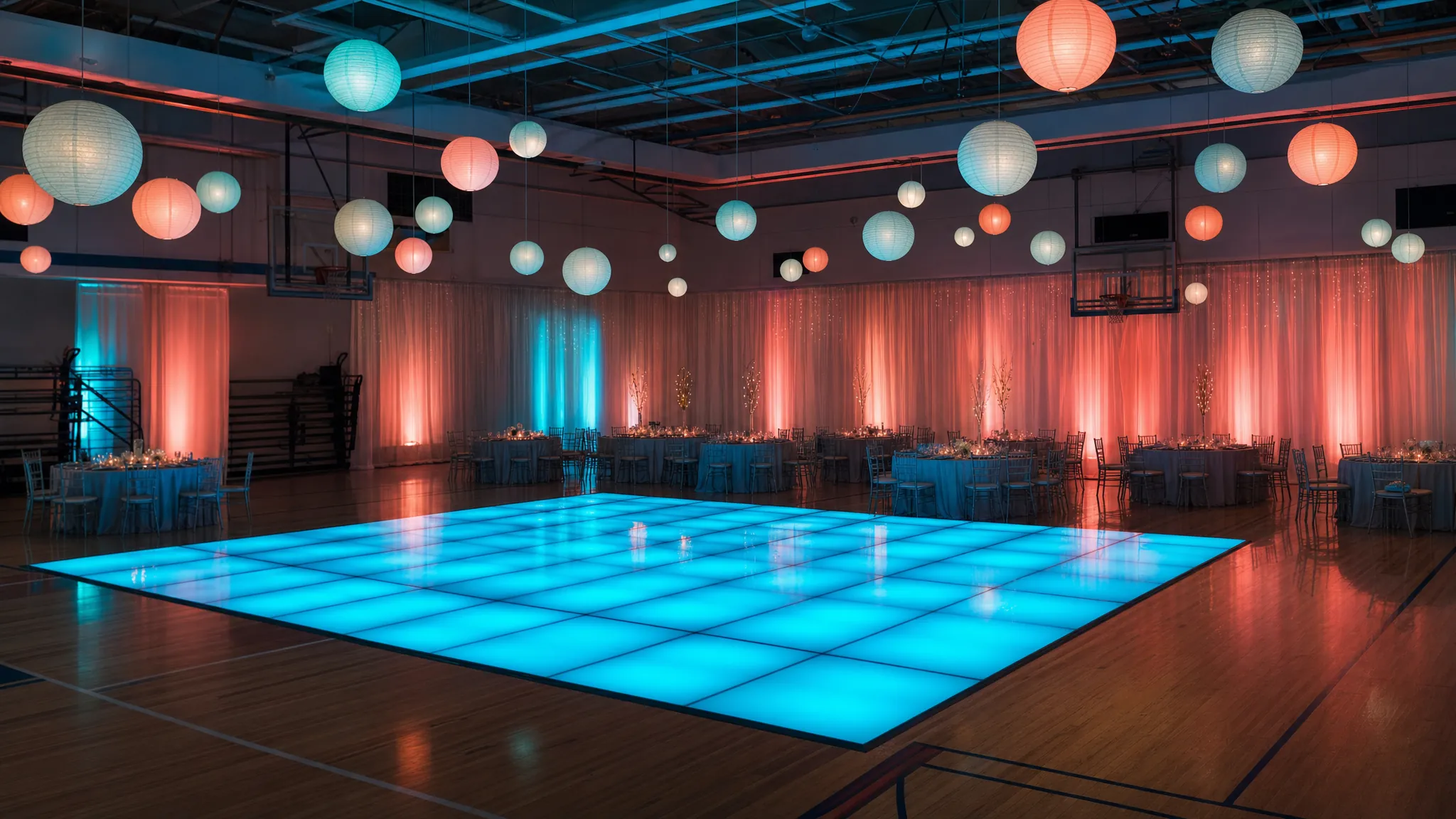
Once the plan is working on paper, choose the room's visual center. For a school dance, that is often the dance floor because it gives students a clear place to gather, gives the DJ or playlist a natural focal point, and makes the event look active in photos. It can make a simple gym or multipurpose room feel transformed without relying on a mountain of decorations.
Led Dance Floors Dallas helps organizers match a floor to the room, guest count, event timing, and access plan. The Dallas LED dance floor rental page explains the rental details, while the availability request is the right next step once you have a date, venue, and rough floor area in mind.
School dance planning checklist
Before you open ticket sales or send the final invitation, make sure the team can answer these questions:
- What is the event for, and who is it designed to welcome?
- What does the venue allow, require, and provide?
- Who owns the budget, entry, room setup, music, activities, and closing?
- Where will guests check in, dance, eat, take photos, sit, and exit?
- What will guests do if they do not want to dance right away?
- What information do families and students need before they arrive?
- What must be checked before doors open, and who will check it?
- How will the event end, and how will pickup or exit stay organized?
A good school dance does not need to be complicated. It needs a clear purpose, a practical room plan, a few moments people want to join, and a team that knows what happens next. Get those pieces right, and students will remember the night as an event that felt made for them.
Frequently asked questions
How far ahead should you plan a school dance?
Start as soon as the date and venue can be approved. That gives the team time to choose the event format, confirm school requirements, recruit volunteers, promote the event, and solve room-layout questions before they become day-of problems.
What should be on a school dance committee?
Keep the group small enough to make decisions. Assign one person to own school approval and venue details, one to manage the budget and purchases, one to coordinate volunteers and entry, and one to manage the event program. A single point person should keep the whole plan moving.
How do you make a school dance fun for students who do not dance?
Give guests more than one way to take part. A photo area, a simple activity, seating away from the speakers, and a clear social space make the room feel welcoming without turning the event into a list of forced games.
What is the best setup for a school dance?
The best setup protects clear walking routes, gives check-in its own space, keeps food outside the dance zone, and creates one visible focal point for the event. Start with the guest journey, then place the dance floor, photo area, seating, and activities around it.
Related posts
SCHOOL EVENT PLANNING
School Dance Themes: Ideas That Fill the Floor
Choose a school dance theme, make the room work around it, and plan a welcoming night students want to join.
Read the guide ↗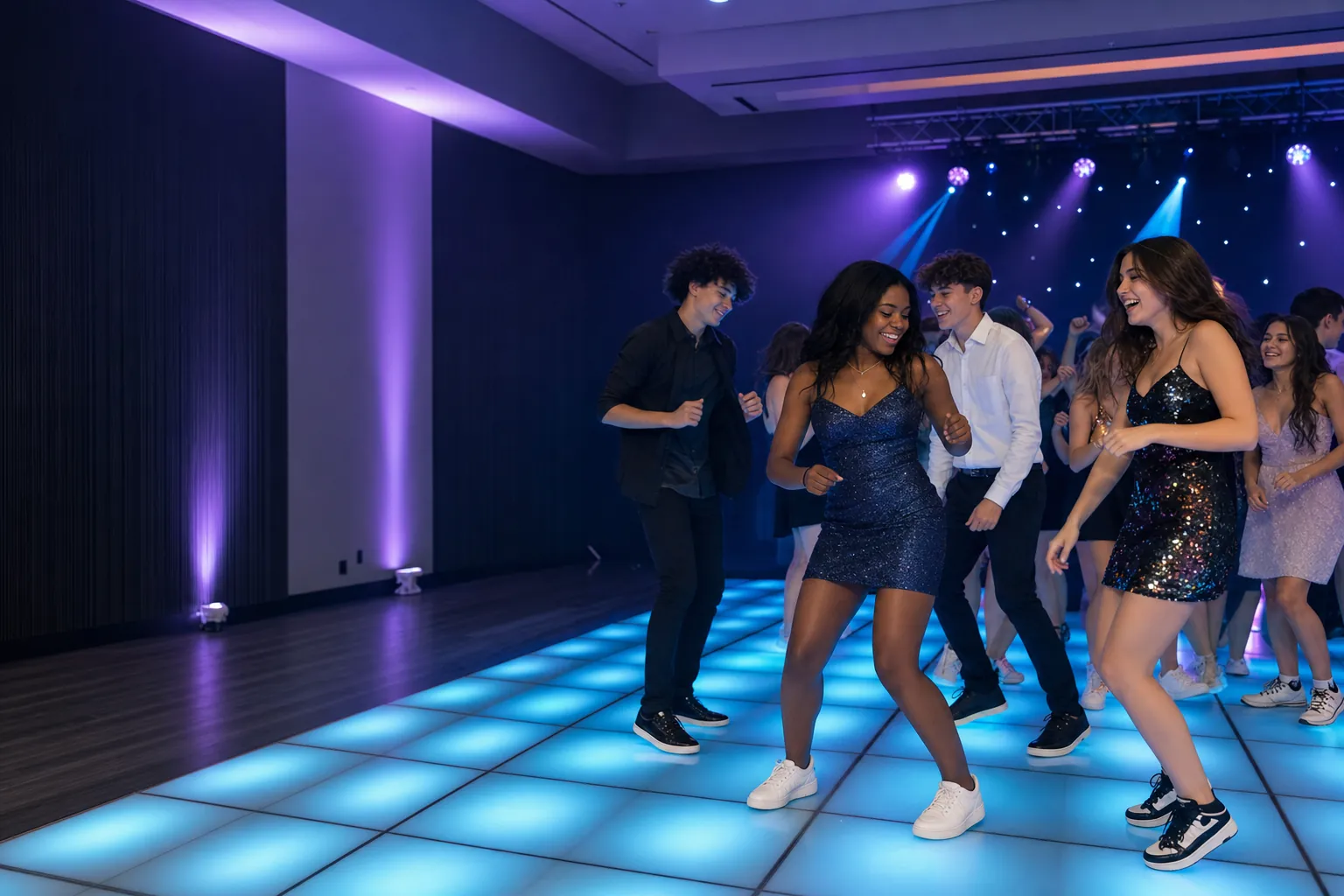
GLOW PARTY IDEAS
Glow Party Ideas: 12 Ways to Make the Night Shine
Build a glow event around lighting, activities, guest flow, safety, and a dance floor people want to use.
Read the guide ↗