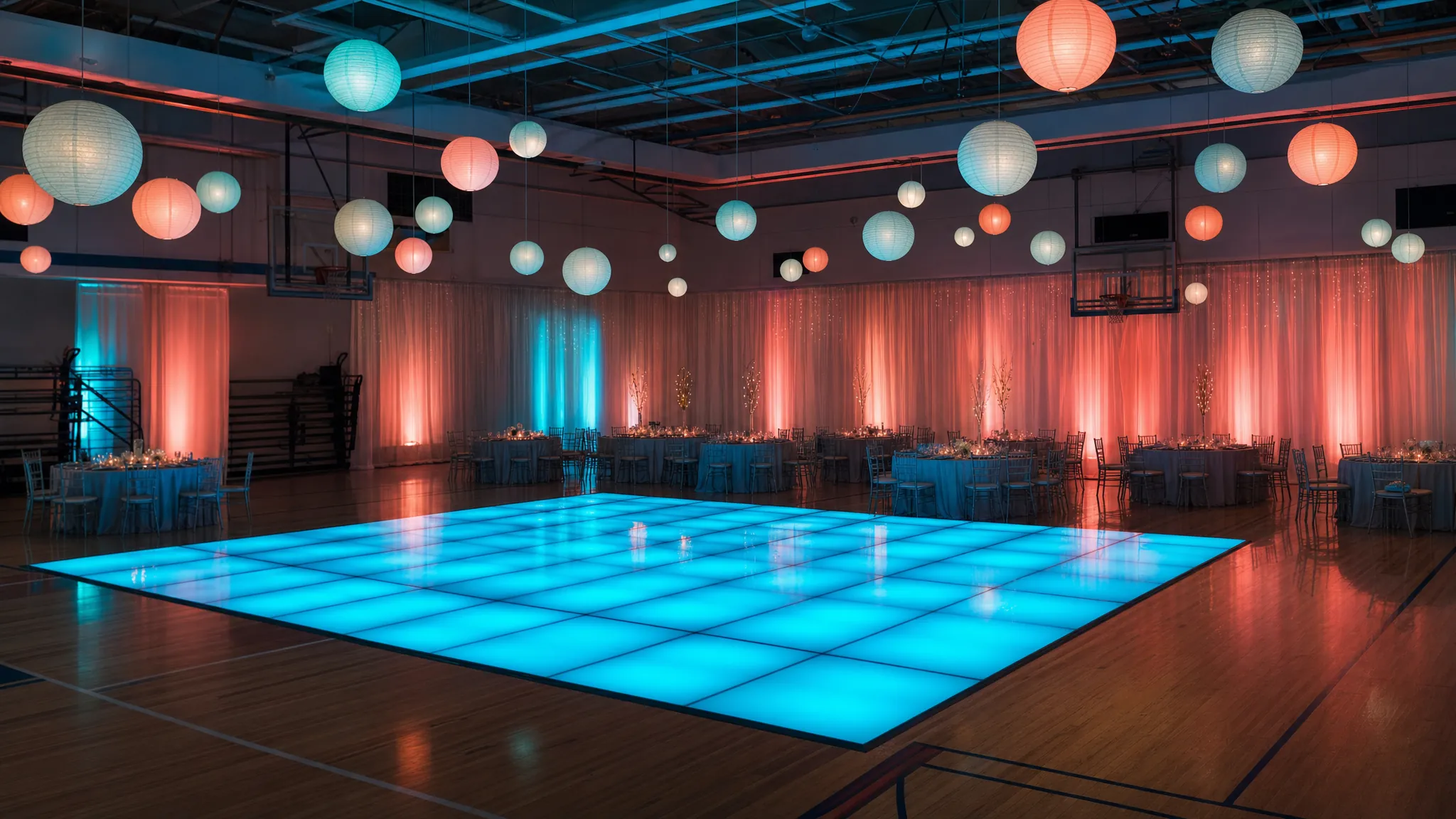
A school dance has to do several jobs at once. It needs to feel exciting to students, straightforward for families, manageable for volunteers, and comfortable for guests who would rather not spend the night on the dance floor. A strong theme helps because it gives every decision a filter: the invitation, check-in table, music, photo moment, decorations, snacks, and lighting all have somewhere to start.
That does not mean the theme needs a giant production budget. A theme works best when it has one visual idea people recognize quickly and a few supporting details that make it feel intentional. Start with the experience you want students to have when they walk in, then build only what helps deliver that experience.
Start with the group, not the decorations
Before naming a theme, decide who the event is really for. An elementary family dance needs a different level of participation from a middle-school social or a high-school homecoming. Think about the age range, whether parents will attend, how long the event lasts, the room you have, and what students already respond to at school.
For younger students, themes work best when they create an easy visual world without asking guests to perform. A glow night, color party, or winter lights theme is simple to understand at a glance. For older students, a sneaker ball, decades night, or dressed-up school-color celebration can feel more social without becoming a costume contest. PTO Today’s round-up of school events lists themes including Sneaker Ball, Winter Wonderland Dance, Boots and Bling, Decades Dance, and glow dances. The useful pattern is that each offers a clear room treatment without forcing a complicated dress code.
Give the theme a quick reality check before it becomes the event title. Could a student who hears the name understand the vibe? Can a volunteer buy or make the main decor locally? Does it work with the room you already have? If the answer is no, simplify it. A theme should make decisions easier, not create a second project inside the event.

Choose a theme with one clear visual move
Good themes have a center of gravity. For a glow dance, it may be dark walls, bright reactive color, and a lighted dance space. For a sneaker ball, it may be clean black-and-white styling with a photo wall and a dress cue that students can join with shoes they already own. For a winter lights dance, it may be cool lighting, white paper lanterns, and a photo area that looks good from every angle.
Here are twelve school dance themes that are broad enough to adapt to a gym, cafeteria, hall, or event venue:
- Glow Night
- Sneaker Ball
- Decades Dance
- Winter Lights
- School Colors Night
- Neon Arcade
- Under the Stars
- Silver and Gold
- Black and White Ball
- Spring Fling
- Masquerade Lights
- Backyard Block Party
Do not judge these themes by their names alone. A strong choice fits the room and the planning team. “Under the Stars” can be made with string lights and dark fabric. “School Colors Night” can use the colors already present in student spirit wear. “Black and White Ball” needs contrast and good lighting, not dozens of decorative pieces. The smaller the planning group, the more valuable that restraint becomes.
Give the room a focal point
Students should understand where the energy is as soon as they enter. Pick one part of the room to carry the theme at full strength, then let the rest stay clean and usable. The dance area is usually the best choice because it pulls people together, creates the photos families will remember, and gives the DJ or playlist a natural home.
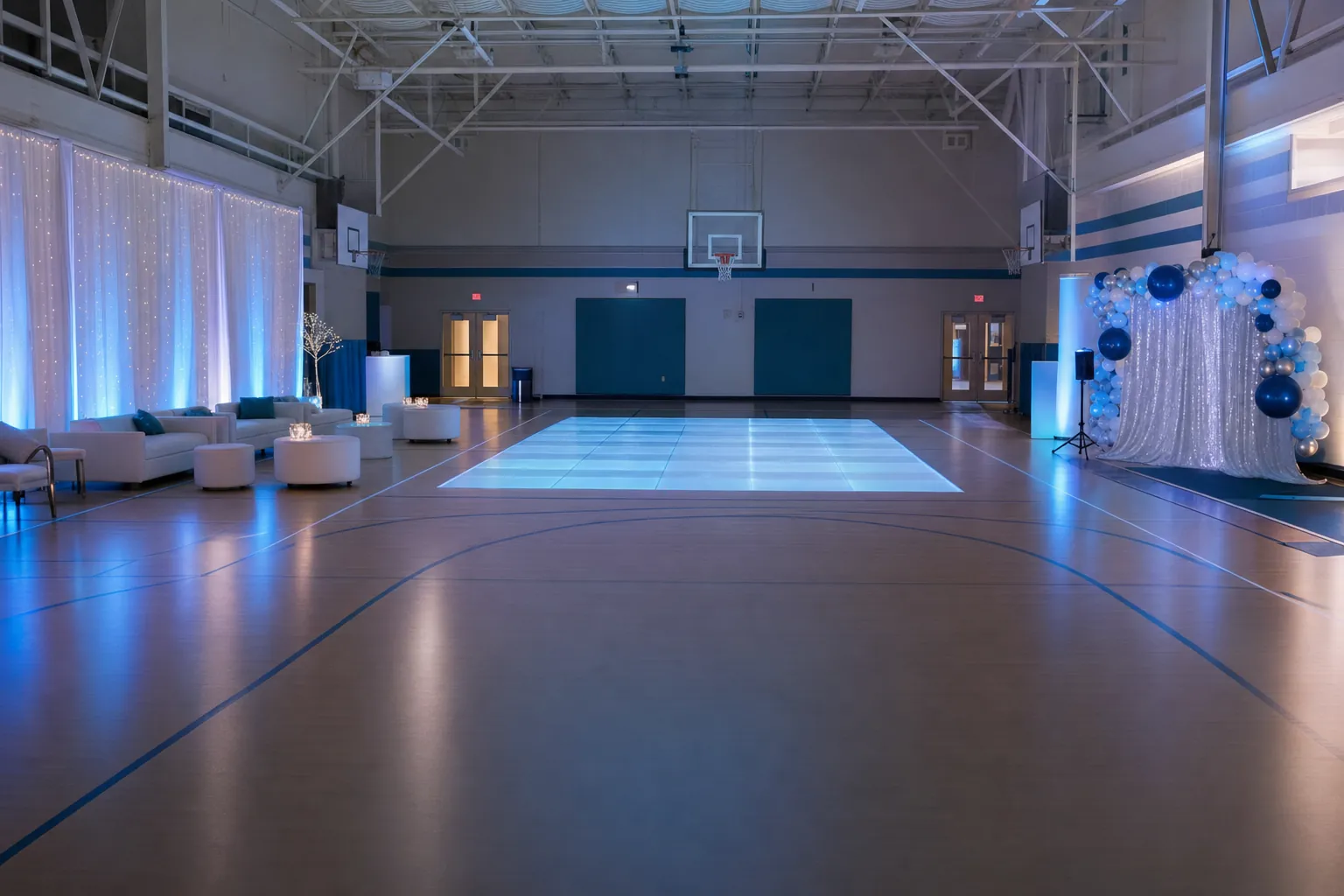
For a glow or lights-based theme, a bright floor can make the room feel active before the first song starts. For a classic school dance, it can give an open gym a polished focal point without turning every wall into a backdrop. Use the site’s floor-size guide to think through the footprint before committing to tables, food service, games, or a photo area. A floor should invite people in without pinching the routes around it.
Keep the theme concentrated around that focal point. Put the photo area where it can catch some of the lighting but does not create a line through the entrance. Let snack tables sit outside the dance zone. Reserve one calmer place where students and families can sit, talk, or take a break. The room will feel more considered because every part has a job.
Plan the guest journey before buying supplies
A theme succeeds when the night is easy to move through. Walk the route in order: parking or drop-off, check-in, the first view of the room, activities, food, restrooms, the dance area, and the exit. If a family needs to ask where to go at three points in that path, the event will feel more chaotic than it needs to.
National PTA’s event-planning guidance recommends checking venue requirements and restrictions, following fire and safety rules, and making entrances, rooms, and restrooms accessible. Those basics are part of the experience, not an afterthought. Keep exits visible, leave walking lanes clear, tape down or protect cables properly, and confirm what lighting has to remain on before building a dark-room theme.
The most useful glow-event advice is practical: PTO Today recommends confirming in advance whether the lights can actually be turned off without leaving restrooms unusably dark, and it suggests activity options for students who do not want to dance or cannot take part in the same way. That is a better planning standard than assuming a louder room automatically means a better event.
Build in more than one way to participate
A school dance does not need to be a two-hour dance-off. The best nights let students choose how involved they want to be. Give the room an active zone, a photo or social zone, and one low-pressure activity. A glow bracelet station, neon message wall, quick game table, or simple photo backdrop gives students something to do while they warm up.
For a family dance, this matters even more. Parents and younger children may arrive at different times, siblings may need a quieter option, and not everyone will want the same music or activity. PTO Today’s family-dance advice also makes a useful inclusion point: event names and invitations can welcome students with any important adult rather than framing attendance around only one family structure. Small choices in language and layout make an event easier for more people to enjoy.
Keep activities easy to join mid-event. A station that needs a long explanation or a scheduled start time becomes another volunteer assignment. A station that students can understand in ten seconds creates movement without needing an announcement every five minutes.
Make entry feel organized and exciting
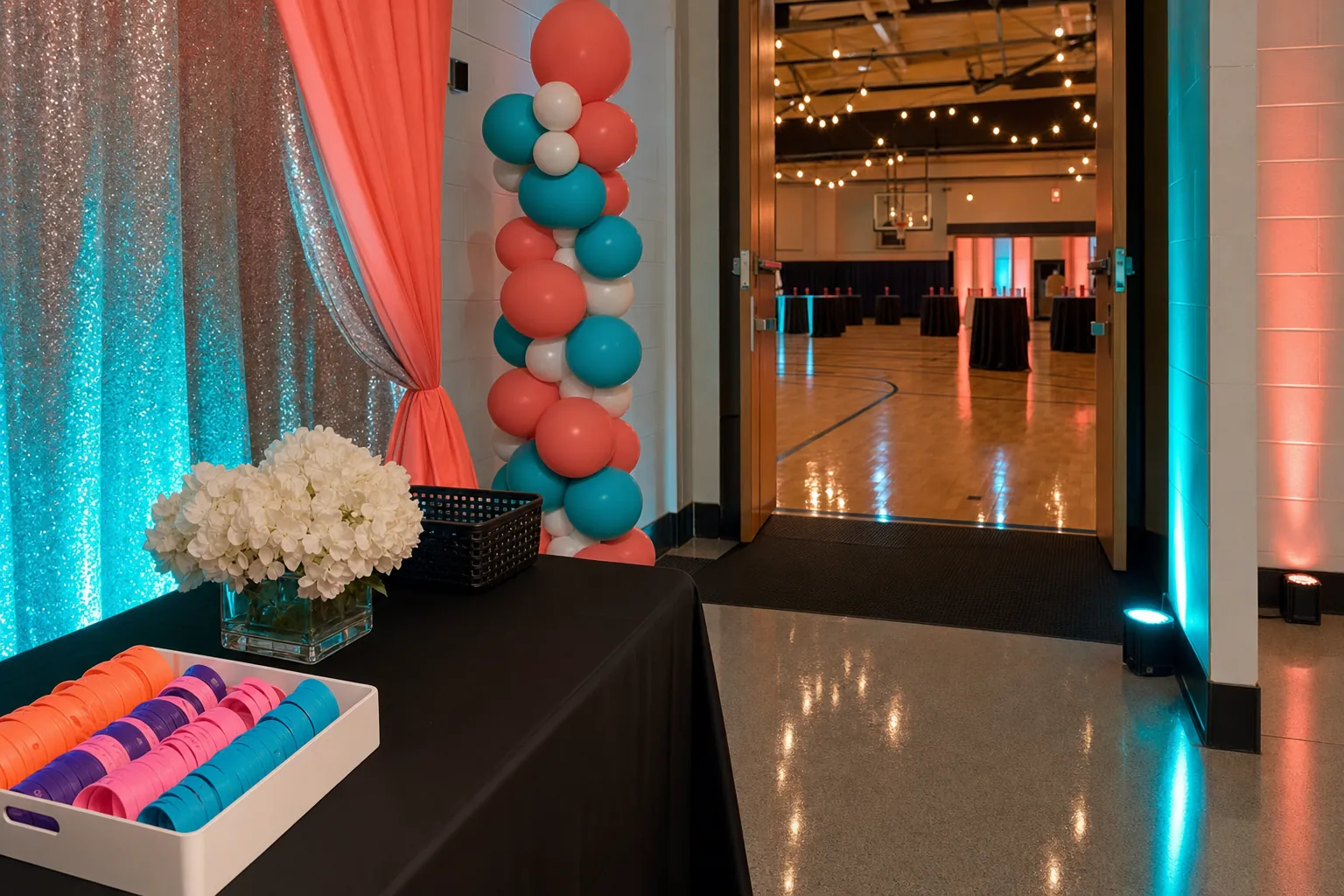
The entry is where an ordinary school night becomes an event. It does not need to be elaborate. A clear check-in table, simple wristband or ticket process, one photo-ready moment, and a visible path toward the main room are enough to give students an immediate sense that something special is happening.
Let the theme show up at check-in, but do not let it slow check-in down. If you are handing out glow items, tickets, or wristbands, keep them sorted and easy to reach. If the event has a parent pickup process, agree on it before doors open. The same current glow-event guide includes volunteer-staffing examples and a clear check-in and check-out process, which is a useful reminder that entry is both part of the fun and one of the most important moments of the night.
Use music and lighting to create a rhythm
Theme is not only visual. The room needs a rhythm. Start with familiar songs and enough light for people to settle in. Put one easy group moment near the beginning, then leave time for dancing, photos, and activities to happen naturally. Later, use a short contest, request block, or theme-specific song run to refresh the energy.
Lighting should support that rhythm instead of making the room hard to use. Bright visual moments belong near the dance floor and photo area. Walking routes, volunteer stations, exits, and restrooms need practical visibility. If flashing effects are part of the plan, use them thoughtfully and give guests a lower-stimulation place to step away. A theme should feel immersive, not overwhelming.
Keep the budget focused on what guests notice
The fastest way to overspend is to decorate every available surface. Most guests remember the entrance, the photo moment, the dance floor, and the way the room felt when it was full. Spend there first. A limited color palette, one focal point, and a few repeatable materials will look more polished than a mixed collection of unrelated props.
Set three budget buckets: the main visual moment, the guest experience, and the practical needs. The main visual moment might be the dance floor, lighting, or a backdrop. Guest experience could include wristbands, a photo prop, or an activity table. Practical needs cover signage, check-in supplies, volunteer lighting, and anything required to keep the room running smoothly. Once those buckets are funded, add details only where they improve the actual experience.
When an LED dance floor makes the theme land
A themed school dance needs a place where the night comes together. An LED floor gives a glow night its centerpiece, makes a simple color palette feel bigger, and turns an open gym or hall into a space students want to photograph and use. It also helps the dance area read clearly from the entrance, which makes it easier for the whole room to find its energy.
Led Dance Floors Dallas helps organizers match the floor to the room, the guest count, and the way the event needs to flow. Browse the Dallas LED dance floor rental details, then share the date and venue through the availability request when you are ready to talk through the setup.
A simple school dance planning checklist
Before you announce the event, make sure the team can answer these questions: What is the theme in one sentence? What is the first thing students see when they walk in? Where will people dance, take photos, get food, and take a break? Which paths must stay clear? What can a student do if they do not want to dance? Who owns check-in, music, activities, and closing? When those answers are clear, the decorations become the easy part.
For more ideas specific to a lights-based event, read Glow Party Ideas: 12 Ways to Make the Night Shine. The strongest school dance themes do not need to look identical. They need to give students a welcoming reason to arrive, participate, and stay through the last song.
Frequently asked questions
What are good school dance themes?
Good school dance themes are easy to explain, easy to decorate, and broad enough that students can join in without buying a costume. Glow night, sneaker ball, decades dance, winter wonderland, and a school-color celebration are reliable options because they give the room a clear look without overcomplicating the event.
How far ahead should a school dance be planned?
Start with the date, venue approval, and theme several weeks ahead so organizers can confirm the room, recruit volunteers, promote the event, and order only the supplies the plan actually needs. More time is useful for a large fundraising event or a gym that needs a fuller transformation.
How do you make a school dance inclusive?
Offer a theme that does not require a specific costume, use welcoming event language, keep clear paths to restrooms and exits, and provide options beyond dancing. A photo spot, activity table, and calmer seating area let more students take part in a way that feels comfortable.
What should be the centerpiece of a school dance?
Choose one highly visible focal point and build the rest of the room around it. For a dance-led event, that is usually the dance floor. It gives students a clear place to gather and makes the event feel active in photos without requiring the whole room to be overloaded with decorations.
Related posts
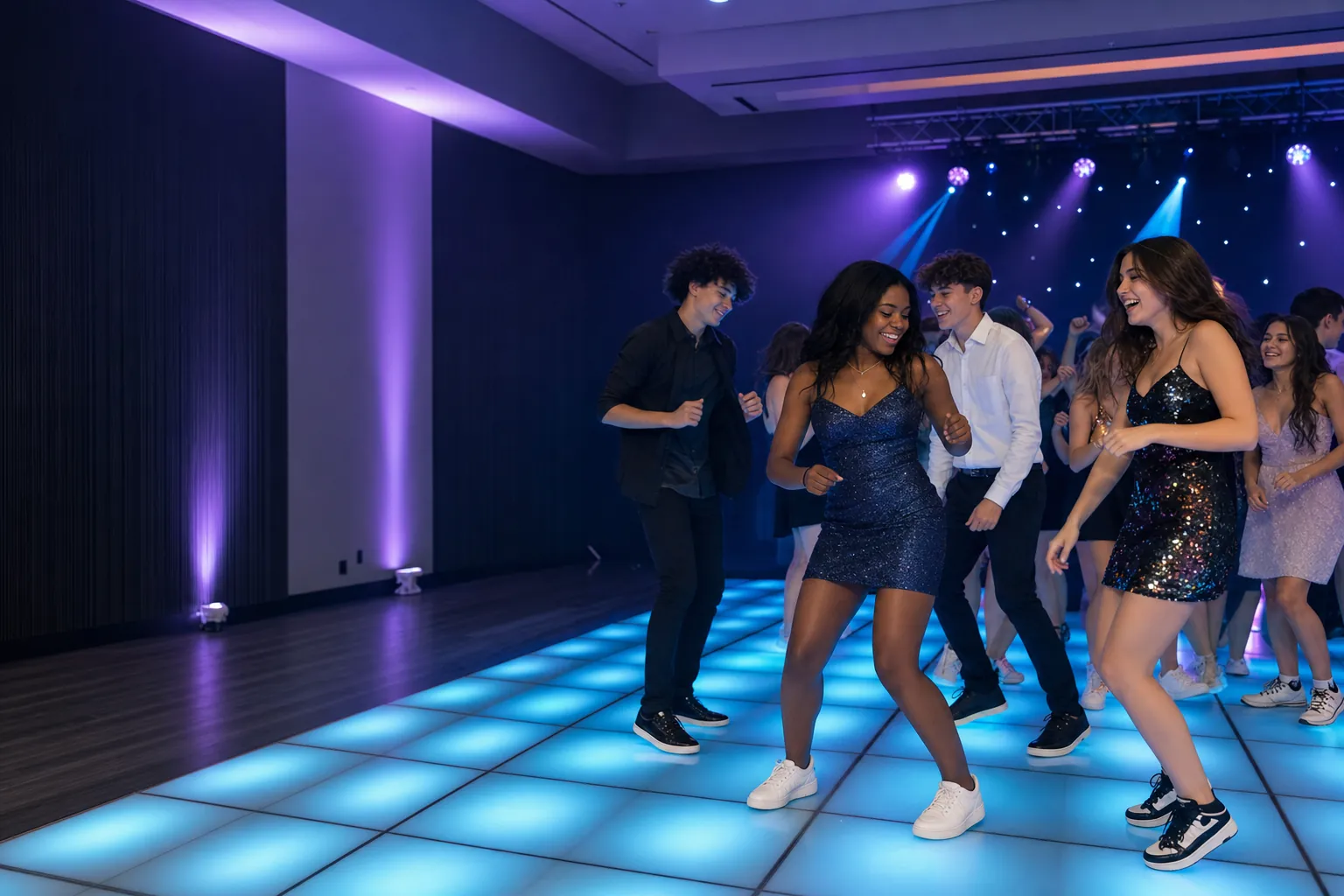
GLOW PARTY IDEAS
Glow Party Ideas: 12 Ways to Make the Night Shine
Build a glow event around lighting, activities, guest flow, safety, and a dance floor people want to use.
Read the guide ↗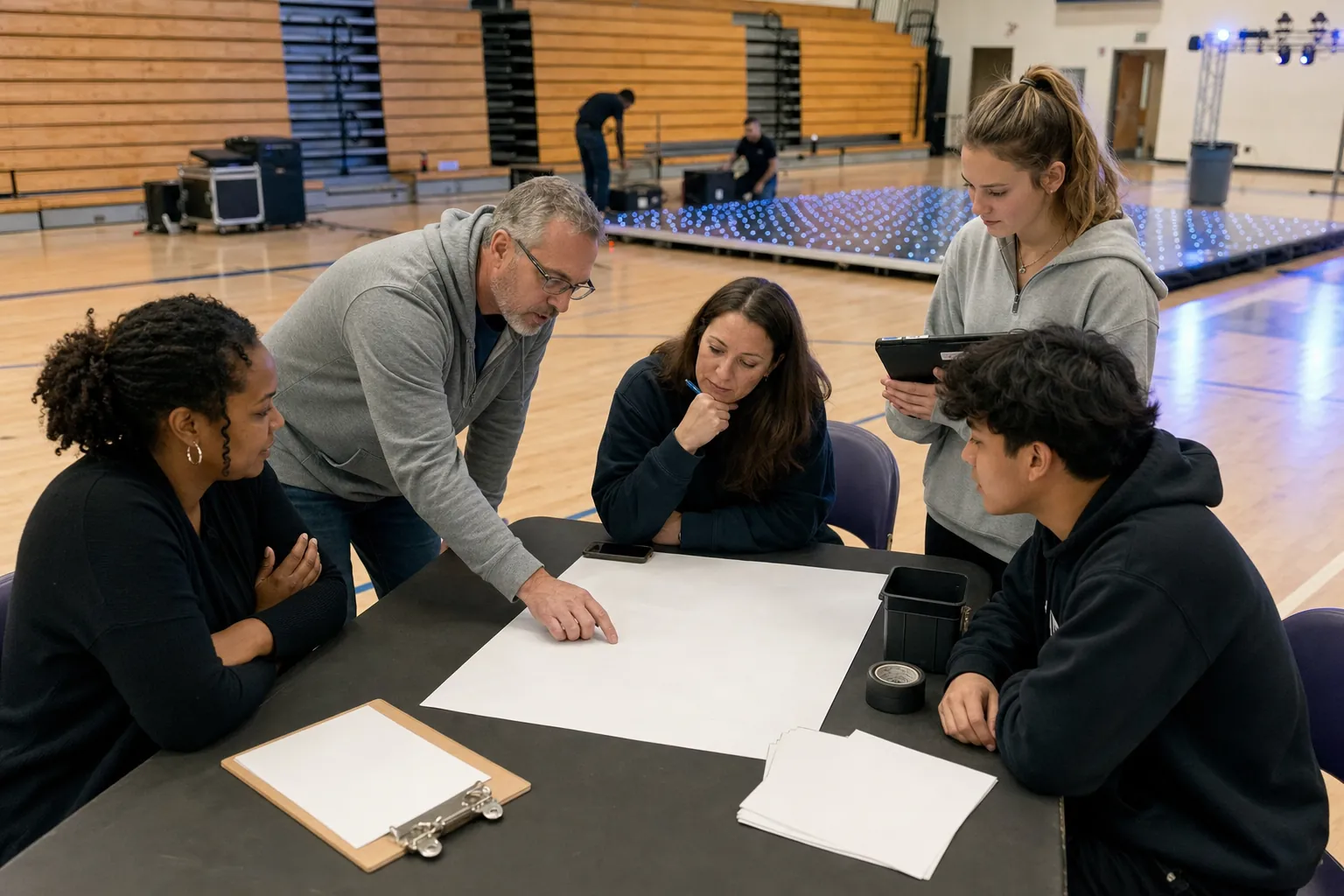
SCHOOL EVENT PLANNING
How to Plan a School Dance: A Practical Checklist
Use a clear checklist for the venue, budget, guest flow, program, volunteers, and dance floor.
Read the guide ↗