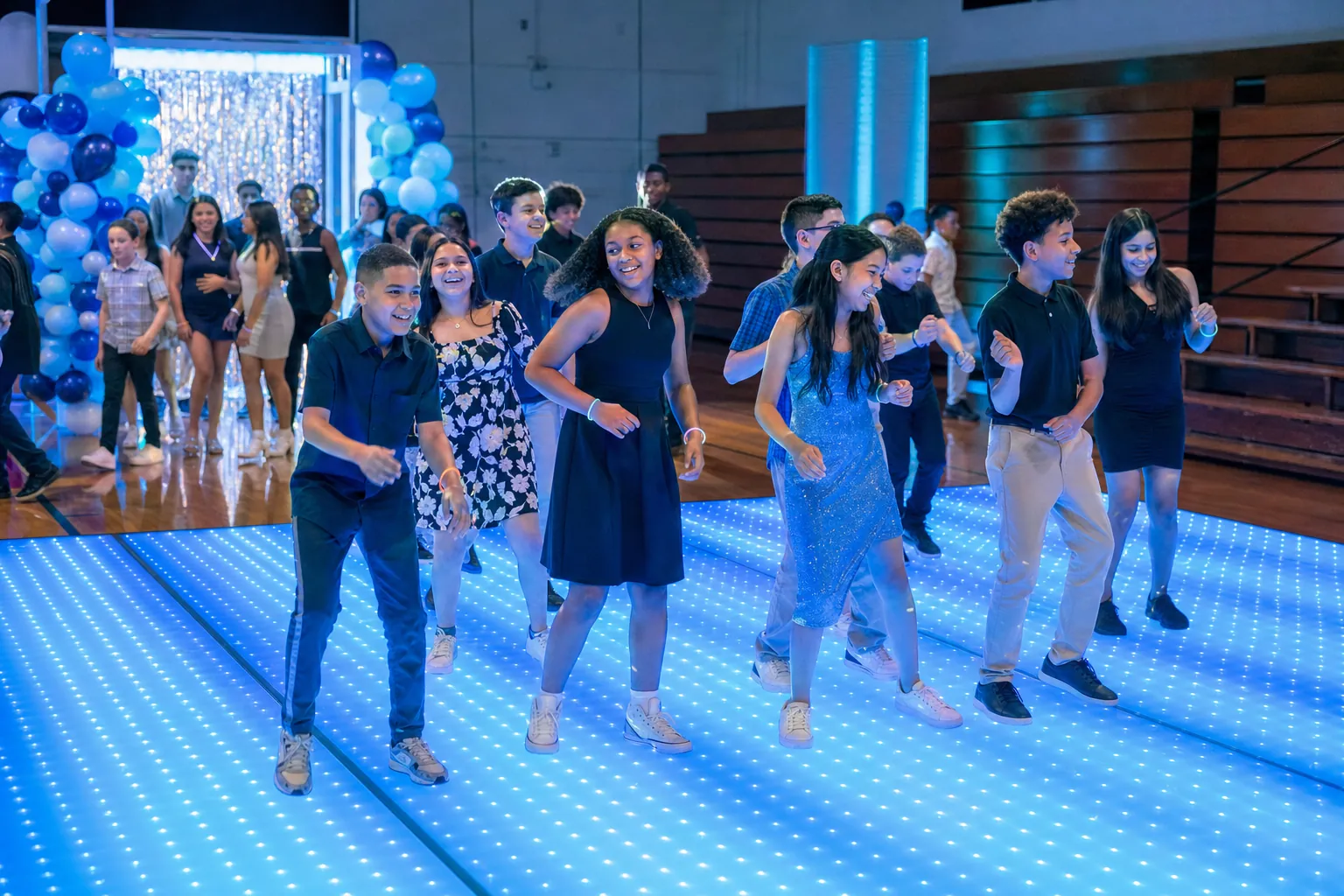
When adults plan a school dance, it is tempting to focus on the part that photographs well: the theme, backdrop, lights, or playlist. Students experience the night differently. They walk in looking for their friends, decide whether the room feels comfortable, and look for a low-pressure way to take part. The dance floor matters, but it should not be the only option the room offers.
The best school dance ideas create a few simple choices that work together. Some students will head straight for the music. Others will start at the photo area, get a snack, sit with friends, or wait for a familiar group activity to pull them in. A room that supports all of those paths feels busy, welcoming, and much less awkward from the first ten minutes through the last song.
1. Choose one shared moment, then give students choices around it
Every good school dance needs a clear center of energy. It might be the dance floor, the DJ, a glow moment, or a short program feature. Pick one, then build supporting activities around it. When every station competes to be the main attraction, the room can feel fragmented and volunteers get pulled in too many directions.
For most school events, the dance area is the natural anchor. It gives the room movement, makes the music visible, and creates the most memorable photos. Around that center, add a photo moment, a place to take a break, and one optional activity. That is enough variety for students who want to circulate without turning the gym into a carnival.
Start with the school dance themes guide if the event still needs a visual direction. A theme should make the activity choices easier, not create a long list of decorations that only look good before anyone arrives.
2. Build a room with four easy-to-read zones
Students should be able to understand the room in a glance. Where do they enter? Where is the main energy? Where can they take a picture? Where can they sit or get water without leaving the event? A simple floor plan answers those questions without extra signs or a volunteer explaining every step.
- Dance zone: Keep it visible from the entrance and clear around the edges so students can join without squeezing through a crowd.
- Photo zone: Put it close enough to feel part of the event, but not where its line blocks check-in, restrooms, or the dance area.
- Social zone: Use a few chairs, benches, or standing tables away from the speakers so students can talk and reset.
- Refreshment zone: Keep food and drinks outside the dance path, with a clear place for trash and a volunteer who can help the line move.
This layout also helps the adults running the night. Volunteers can see where students are gathering, routes stay open, and the event can feel full without everyone being packed into one corner. The National PTA's event guidance stresses that volunteers should know who to contact when a problem comes up. Assign a lead to each active zone instead of asking everyone to watch everything.

3. Make the photo moment a real activity
A photo area is not just a background. It gives friends something to do together before the dance floor feels comfortable, and it naturally creates small bursts of energy throughout the night. Keep it simple: a backdrop, a consistent color treatment, a few props only if they fit the theme, and enough light for phone photos to work.
Place the photo area where students can see it as they enter or circulate, then leave enough room for a short line. A volunteer can help groups move through without becoming a photographer or director. The goal is not to make people pose perfectly. It is to give them a social reason to gather, laugh, and stay connected to the event.
Use the same visual direction as the rest of the room. For a glow night, that could be colored light and a dark backdrop. For a formal, it might be a clean drape, simple balloons, or one geometric shape. Avoid a huge prop wall that costs more effort than it returns. The activity works because students can make it their own.

4. Use group activities that let people join halfway through
The most effective school dance activities are easy to understand from the edge of the room. Students should be able to watch for ten seconds, recognize the invitation, and step in without needing to know a routine or bring a team. That is why short, familiar group moments outperform complicated contests.
Good options include a familiar line-dance song, a quick dance-circle invitation, a clean song-request countdown, a birthday or team shout-out, or a themed pose challenge at the photo area. Announce the activity, make it last a few minutes, then return to open dancing. A shared moment can reset the room without trapping everyone in a long program.
Skip activities that single out students or reward only the most outgoing people. A spotlight dance battle can be fun for the few students already at the center of the floor, but it can make everyone else more likely to hang back. A practical event plan should give students permission to take part at their own level. That sense of inclusion supports the kind of school connectedness the Centers for Disease Control and Prevention describes as students feeling cared for, supported, and like they belong.

5. Give the first ten minutes a purpose
An empty dance floor at the start of an event is normal. The mistake is treating it like a problem that needs a big announcement. Students often need a few minutes to arrive, find friends, take in the room, and decide where they want to be. Plan that opening window instead of hoping energy appears on command.
Open the photo zone immediately. Start with music that is upbeat but not the biggest song of the night. Let the first activity be easy, such as a song request prompt or a few minutes of photos. Give the dance floor a visible focal point, then let groups gather naturally. Once a few people are moving, the room will usually invite more people in without a forced countdown.
The site's school dance planning checklist can help the team assign who owns arrival, check-in, music, and setup. Those details create a calm opening, which gives the fun ideas a real chance to work.
6. Build a music rhythm instead of a rigid schedule
Music carries the night, but it does not need to be a nonstop series of announcements. Ask the DJ, music lead, or student committee to plan in short arcs: a welcoming set, a familiar group moment, open dancing, a slower reset, then another lift. The shifts help students who have stepped out of the room find a new point to rejoin.
Use student input before the event when possible. A request form can surface songs that matter to the group and keep the playlist from being built only around adult guesses. At the event, avoid promising every request will be played. Instead, treat requests as a temperature check. If the same kind of song keeps showing up, the music lead has useful information about what will bring people back to the floor.
Keep announcements short and clear. Tell students when a shared moment is starting, when a raffle entry closes, or when the final songs are coming up. Then get out of the way. The best dance energy looks self-starting, even when a good plan created the conditions for it.
Before doors open, write a one-page activity brief for the people handling music and volunteers. List the opening song, the two or three shared moments, who makes each announcement, and what happens if the room is already busy or still warming up. It does not need to be a minute-by-minute script. It simply keeps the night from relying on one person remembering every idea in the moment.
7. Give non-dancers a place that still feels part of the party
A seating area is not a failure zone. It is part of how students decide they are comfortable staying. A few chairs or tables near, but not inside, the energy lets friends talk, catch their breath, and watch what is happening without needing to stand in a hallway or leave the room completely.
Make it functional rather than fancy. Place it away from speakers, keep the route to the exit open, and avoid filling it with so much furniture that it becomes its own separate lounge. The point is a brief reset that keeps students connected to the event. Add water nearby if the venue allows it, and make sure the event team knows how to handle spills or a crowded table area.
When the room includes more than one way to participate, it serves a wider mix of students without diluting the dance itself. That is particularly useful for middle-school events, where the social temperature can change quickly and guests may need a little more time before they are ready to join in.
8. Use a centerpiece that makes joining feel easy
The dance floor has a simple job: show students where the energy is and make the room feel transformed. An LED floor can do that especially well in a gym, cafeteria, or multipurpose room because it creates a visible gathering point without relying on a complicated stage set. It also gives the event an image students want to share with friends and families afterward.
The right size depends on the room, guest count, entry route, tables, and the kind of event you are hosting. Leave space around the edge so guests can watch, join, or step out without creating a bottleneck. Review the LED floor size options while the room is still on paper, then use the Dallas LED dance floor rental page to see what the booking conversation needs from the venue and event schedule.
A floor is most effective when it works with the activities around it. The photo zone gets students in the room. The music gives them a reason to cross it. A familiar group moment gives them permission to step onto it. That is how one centerpiece becomes part of the whole experience rather than a beautiful object sitting in the middle of a gym.
A simple school dance activity plan
Use this sequence as a starting point, then adjust it to the age group, event length, and school requirements:
- Arrival: Check-in, photo zone, welcoming music, and open social space.
- First lift: One familiar group moment after students have had time to settle in.
- Open middle: Music, photos, snack break, and open dancing with a short optional prompt every 30 to 45 minutes.
- Final lift: A group photo, last-song invitation, or simple countdown that gives the event a clear close.
Before the night, test the plan by walking the room from the entrance to the dance area, photo zone, seating, snacks, restrooms, and exits. The National PTA's event-planning guidance is a helpful prompt to consider access, volunteer coverage, and safety early, before the room is full of students. Small practical choices are what make the most creative school dance ideas actually work.
Frequently asked questions
What are good activities for a school dance?
The best activities are quick to understand and easy to join or leave. A photo moment, low-pressure group dance, song request station, themed challenge, lounge area, and simple prize drawing give students choices without turning the night into a tightly scheduled program.
How do you make a school dance fun for students who do not dance?
Plan the room so dancing is only one way to participate. Give students a photo area, seating where they can talk, a snack area away from the floor, and one or two short group moments that do not require them to stay in the center of attention.
How many activities should a school dance have?
Three to five distinct ways to participate is usually enough. Too many stations can spread the room out and create more jobs for volunteers. Start with a clear dance area, a photo moment, a comfortable social zone, and one optional activity that refreshes the energy later.
When should school dance activities happen?
Open the photo area and social spaces as guests arrive, then save group activities for after the room has warmed up. A short shared moment every 30 to 45 minutes is often enough to bring people together without interrupting the music or making the schedule feel forced.
Related posts
SCHOOL EVENT PLANNING
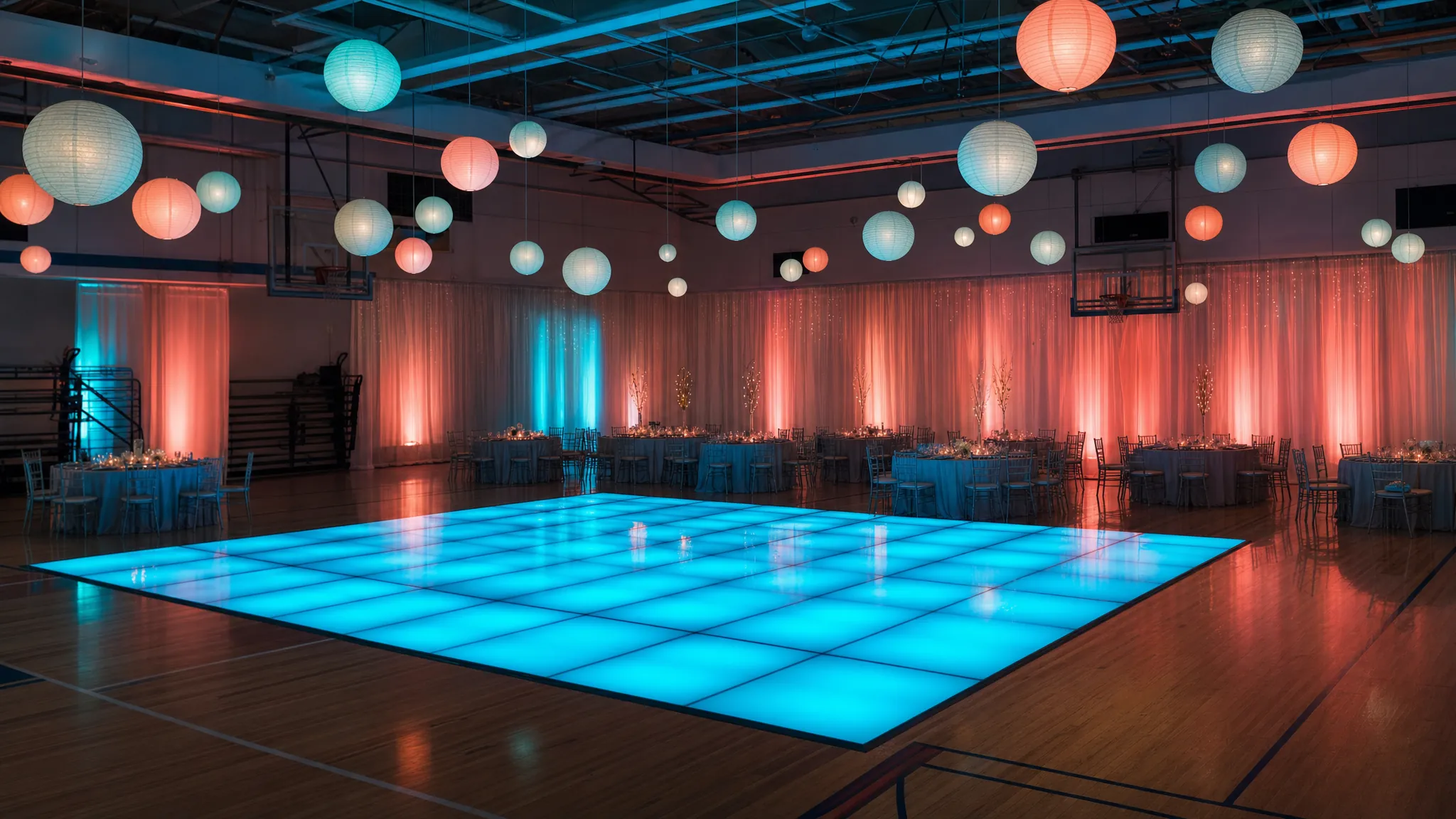
School Dance Themes: Ideas That Fill the Floor
Choose a school dance theme, make the room work around it, and plan a welcoming night students want to join.
Read the guide ↗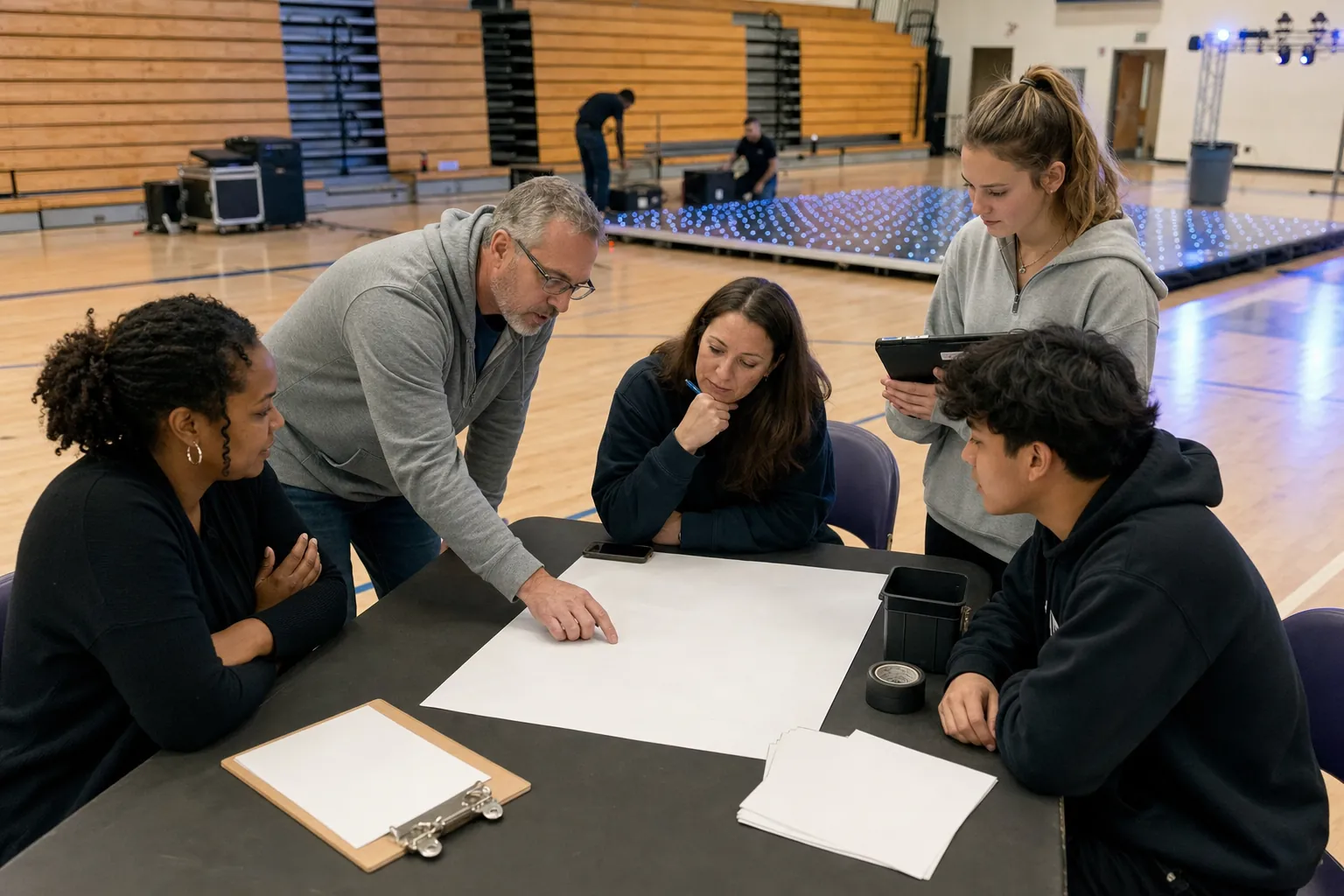
SCHOOL EVENT PLANNING
How to Plan a School Dance: A Practical Checklist
Build a clear plan for the venue, budget, room flow, volunteers, program, and a dance night students want to join.
Read the guide ↗