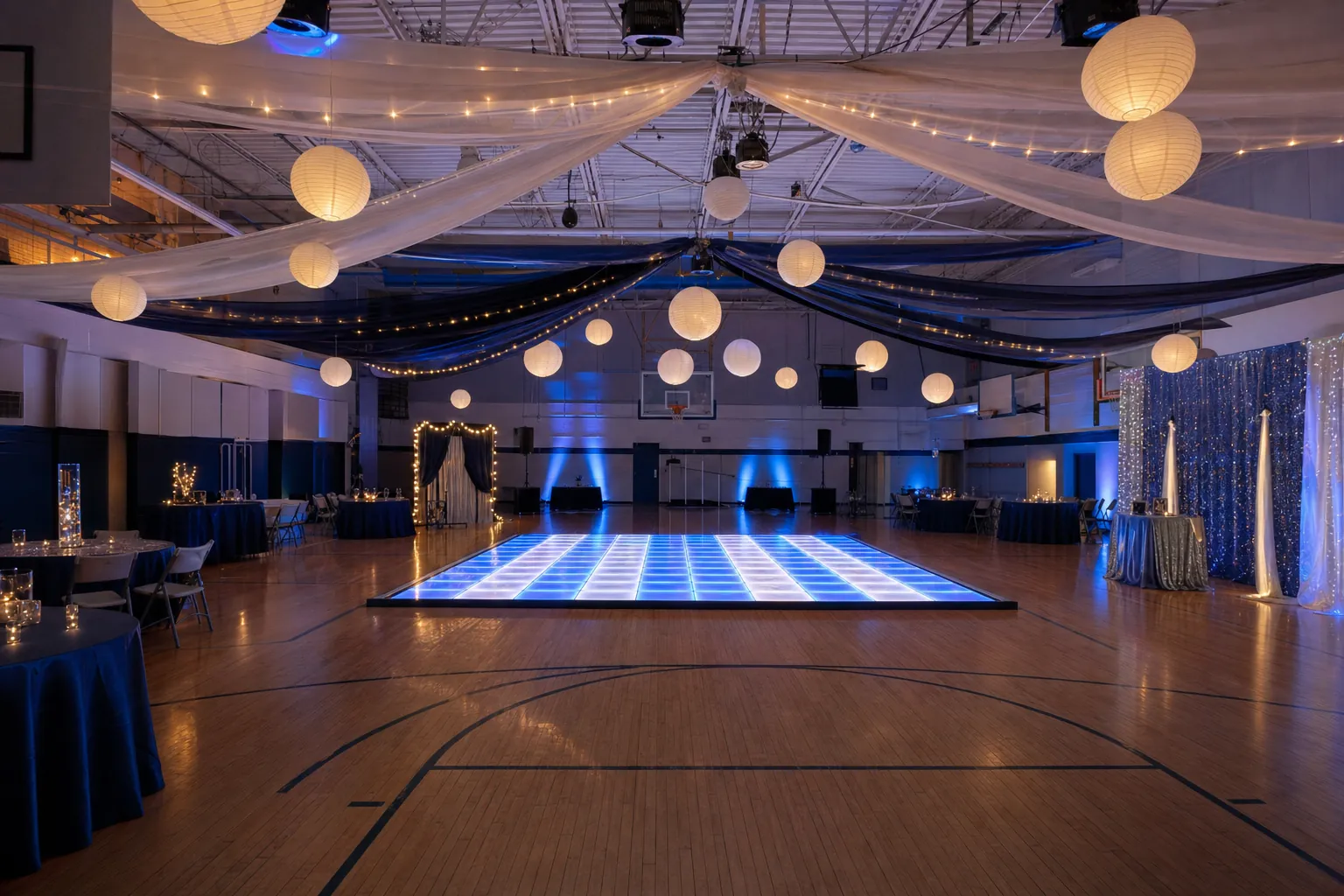
Decorating a school gym can feel intimidating because the room starts out so large, bright, and practical. The answer is not to fill every wall. A good school dance design gives the room a few clear moments: a welcoming entrance, one main attraction, a place for photos, and enough open space for students to move comfortably. Once those moments work together, even simple materials can feel special.
Start by deciding what students should notice first when they enter. Then use the same colors, texture, or light in a few places around the room. That repetition makes a school dance feel planned instead of pieced together. It also lets the team focus its time and budget where guests will actually experience the difference.
1. Start with one visual idea
A dance does not need a dozen decoration themes. Pick one idea that is easy for students and volunteers to understand, then let it guide the room. A glow dance might use dark fabric, reactive color, and light. A winter dance can use white, silver, and soft overhead details. A school-color night can use colors students already own and recognize.
Keep the visual idea broad enough that nobody has to buy a costume or decode a complicated invitation. The site’s school dance themes guide can help you choose a direction that fits the age group and the room. Once the choice is made, resist the urge to add every decoration that matches it. A clear idea is stronger than a crowded one.
2. Make the entrance feel like the event has begun
The entrance is where a regular school building becomes a dance. Use it to give students a quick change of scene: a fabric frame, paper lanterns, a color wash, or a simple welcome display can be enough. The goal is a transition, not a tunnel that causes a line at check-in.
Keep the route through the doorway obvious. Students should be able to see where to check in, where to go next, and who to ask if they need help. Put the most detailed decor around the edge of the entry rather than in the center. A clean arrival is especially useful for younger groups, families, and volunteers who are still finding their rhythm in the first few minutes.

3. Let the dance area carry the strongest energy
Choose one part of the room to be the focal point, then keep the rest of the design in support of it. For most school dances, that focal point is the dance floor. It gives students a visible place to gather, makes the music feel connected to the room, and gives families the photo moments they hope to see.
Decorate around the floor rather than crowding it. Ceiling details, lighting, or a simple backdrop behind the DJ can create a strong frame without taking space away from people who want to join. Use the floor size guide early, while tables and activity zones can still move. The right footprint should make it easy to step onto the floor, watch from the edge, or leave without making a bottleneck.
Think about the room before the first song as well as when it is full. A floor that looks inviting while it is empty helps students understand where the event energy is headed. Once the music starts, it becomes a natural invitation rather than a space someone has to be the first to enter.
4. Give photos their own small destination
A photo area is one of the most useful school dance decorations because it gives friends something to do before they are ready to dance. It does not need a giant build. A backdrop, a few repeated colors, enough light for phone photos, and a clear place to stand can do the job well.
Place it near the action, but not in a route that guests need for check-in, restrooms, or refreshments. Leave room for a small group and a short line. That keeps the photo moment social instead of turning it into a traffic problem. If the room is themed, use the same material or colors from the entrance and dance area so the photos feel part of one event.

5. Decorate up, then leave the floor clear
Gyms have high ceilings and wide walls, which can make decorations feel small when they stay close to the ground. A few overhead elements, such as paper lanterns, string lights, fabric, or hanging shapes, can make the room feel different without taking away usable floor area. Repeat one shape or texture instead of mixing too many materials.
Before adding anything overhead, confirm what the venue allows and who is responsible for setup and removal. Choose pieces that can be secured cleanly and taken down on schedule. Decorations should never make staff wonder where an exit, a speaker, or a route has gone. The best visual choices still let the room work like a school space when the night is over.
Walls can carry the same idea in a lighter way. A few fabric panels or color blocks behind a DJ table, photo zone, or lounge area will read more clearly than trying to cover every painted surface. Put effort where students will naturally face when they enter, take photos, or gather around the music.
6. Build the room in zones, not piles of decor
Decorations work better when every area has a job. A school dance is easier to run when students can tell where to arrive, dance, take photos, sit, and get refreshments at a glance. That makes the room feel organized without filling it with signs or asking volunteers to give directions all night.
- Welcome zone: Check-in, wristbands, tickets, and the first visual cue for the theme.
- Dance zone: The floor, music, and a clear edge where students can watch or join.
- Photo zone: A simple background with enough room for groups and a short line.
- Social zone: A few seats or standing tables where students can talk and reset.
- Refreshment zone: Food and drinks kept outside the main dance path.
The school dance activities guide has more ways to make each zone useful once students arrive. A clear room also supports the kind of belonging that the Centers for Disease Control and Prevention describes as students feeling cared for, supported, and like they belong. The goal is not to make every student dance. It is to give every student a comfortable way into the night.

7. Keep the color palette simple
Two or three colors are enough for most school dance decorations. Choose one main color, one supporting neutral, and one accent that can appear in lighting, paper goods, or a photo backdrop. Too many colors make a large gym feel busier, especially once students, tables, and music equipment arrive.
School colors are often the easiest place to start because they already feel familiar. For a formal event, navy, silver, white, or black can create contrast without asking every item to match exactly. For a glow night, use one bright accent against dark surroundings so the room looks active instead of fluorescent from wall to wall.
Test the colors under the actual event lighting before committing. A fabric or balloon color that looks good during setup can disappear once the room is dimmer or take on a different tone beside blue light. One quick test saves the team from buying decorations that only work in a shopping cart photo.
8. Plan the setup for real volunteers
Good school dance decorations should look intentional without requiring a professional set crew. Break the work into zones, give each zone one lead, and decide what must be finished before students arrive. Start with the entrance, dance area, and photo spot. If time remains, add smaller details to seating or refreshment areas.
Use materials that travel and store easily. Fabric, lanterns, paper decor, lightweight backdrop pieces, and battery lighting are often easier to handle than a collection of fragile props. Keep a small kit with tape approved for the venue, clips, extension planning, trash bags, and a printed room map. The school dance planning checklist can help assign setup, music, check-in, and cleanup before event day.
When volunteers know what is essential, they can make good decisions if the room, schedule, or available help changes. That is what makes a design feel calm when guests arrive, even if setup had a few surprises.
9. Use the floor to transform the room, not complicate it
An LED dance floor can give a school gym the visual shift that decorations alone often struggle to create. It provides a bright center, supports a glow or color-led theme, and makes the room look active in photos. The key is to plan it with the rest of the layout, not add it after every table and activity station is fixed.
Led Dance Floors Dallas helps organizers match a floor to the venue, guest count, event timing, and access plan. The Dallas LED dance floor rental page explains the booking details, while the availability request is the right next step when the date, venue, and rough floor area are known. A clear setup plan means the floor can be the room’s centerpiece while entrances, exits, photos, and refreshments still work around it.
Simple school dance decoration checklist
Use this list during the final walk-through:
- One clear theme or color direction is visible from the entrance.
- Check-in, exits, restrooms, refreshments, and seating have clear paths.
- The dance floor is easy to see and has open space around its edge.
- The photo area has good phone lighting and does not block a main route.
- Overhead and wall decorations are allowed, secure, and assigned to someone for removal.
- Each major zone has a volunteer who knows what they are responsible for.
- The room still feels welcoming for students who want to talk, take photos, or join the dance later.
A school dance does not become memorable because every corner has something hanging in it. It becomes memorable when students walk into a room that feels different, know where the energy is, and have an easy way to become part of it.
Frequently asked questions
How can I decorate a school gym for a dance?
Start with one visual direction, then use it at the entrance, above the dance area, and at one photo spot. Keep the rest of the gym clean enough for check-in, refreshments, seating, and clear walking routes. A few repeated materials and colors will feel more intentional than a different decoration in every corner.
What are inexpensive school dance decorations?
Paper lanterns, fabric drape, string lights, colored paper, a simple photo backdrop, and school-color details can change the room without requiring a large build. Concentrate the effort where students first arrive, where they take photos, and around the dance floor rather than trying to cover every wall.
What should be the focal point at a school dance?
Choose one area to carry the strongest visual energy. For a dance-led event, that is usually the dance floor because it gives students a clear gathering point and makes the room feel active in photos. Support it with a nearby photo area and a clean entrance, rather than competing decorations throughout the gym.
How do you keep school dance decorations practical?
Walk the room before setup and protect the routes students will use most: check-in, exits, restrooms, refreshments, seating, and the dance area. Assign a person to each major zone, keep decorations secured, and choose pieces that can be installed and removed without holding up the event schedule.
Related posts
SCHOOL EVENT PLANNING
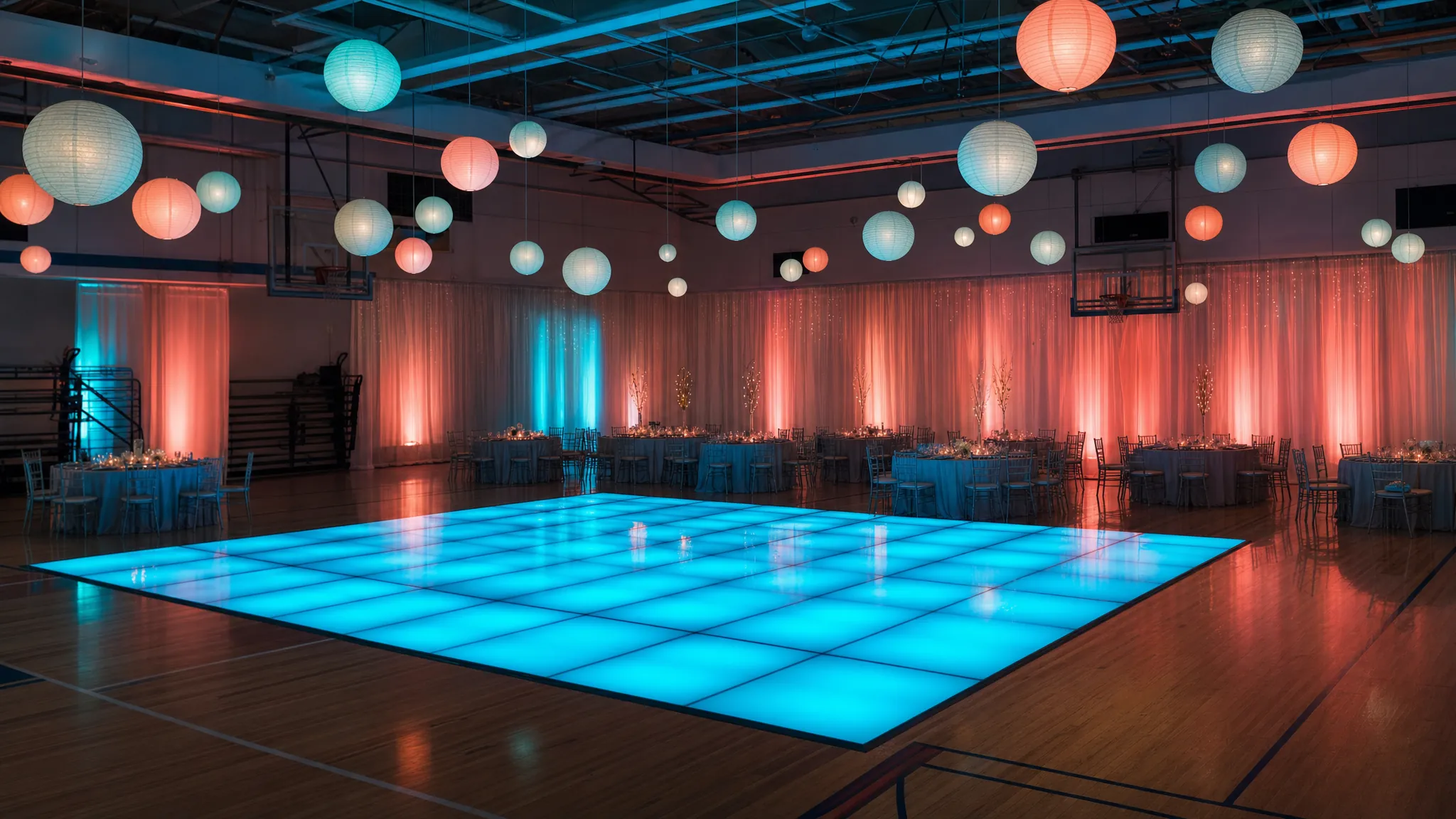
School Dance Themes: Ideas That Fill the Floor
Choose a school dance theme, make the room work around it, and plan a welcoming night students want to join.
Read the guide ↗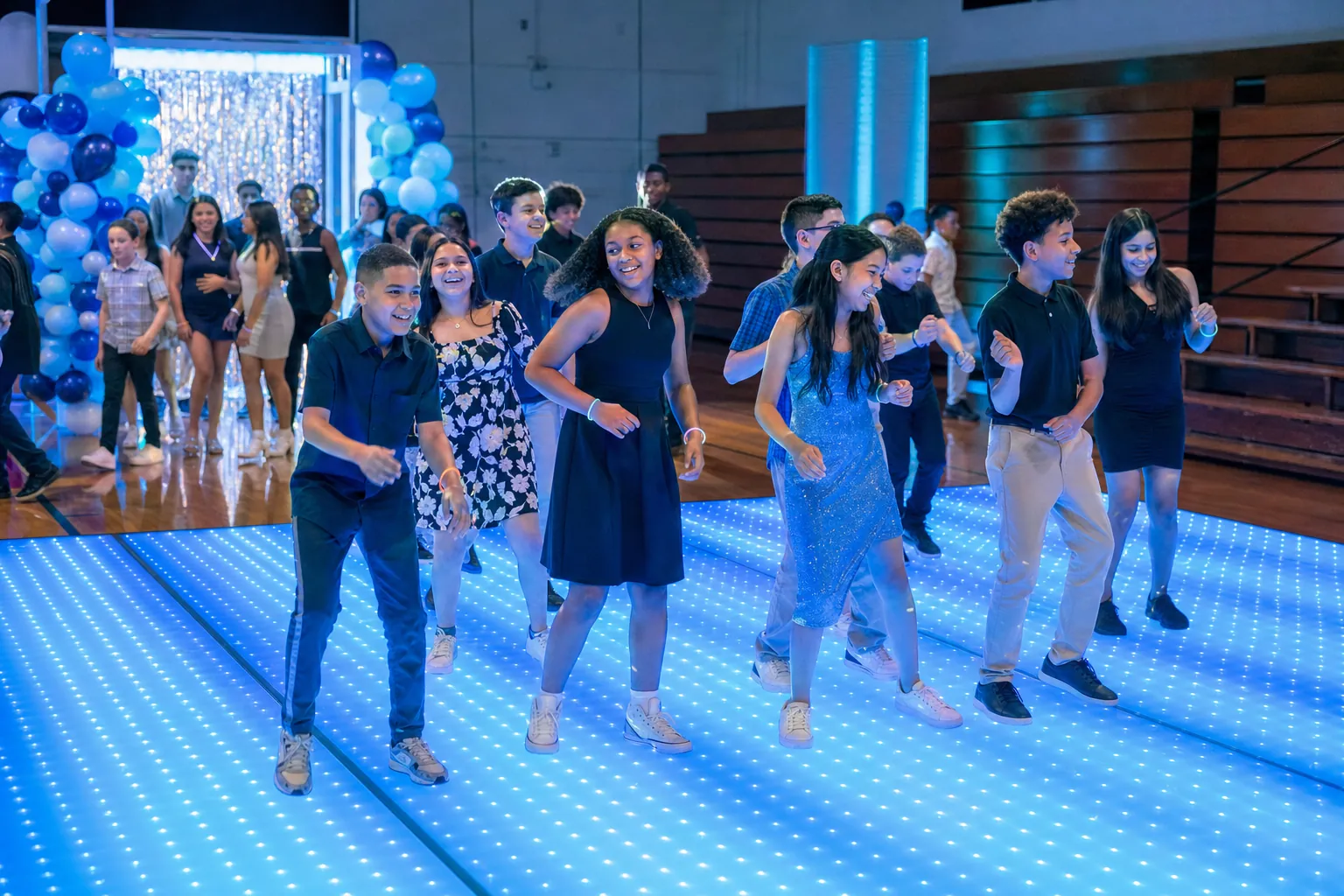
SCHOOL EVENT PLANNING
School Dance Ideas: Activities Students Will Join
Give students more than one way to participate with photo moments, group activities, and a room that keeps moving.
Read the guide ↗