A playlist can make a school dance feel effortless, but it is one of the easiest parts of the night to get wrong. A list built from adult guesses can feel out of touch. A list built only from requests can create awkward jumps, language problems, and songs that do not fit the event. The practical answer is to treat music as part of the event plan, not a last-minute download.
Start with the kind of night the school wants to host. A middle-school social, a homecoming dance, and a formal all need different pacing. Once the team has a clear age range, event length, school rules, and a rough program, it can build a flexible set that welcomes students in, gives the floor a few dependable lift moments, and closes without a scramble.
Start with the school’s standards, not a streaming playlist
Before anyone adds a song, agree on who gives final approval. That might be an administrator, activities director, parent group lead, or the DJ working with the school. The decision should cover both language and subject matter. A track may be labeled clean because explicit words have been removed, while still not fitting the event or age group.
Preview the exact edit that will play, not simply a title on a list. Versions can differ across services, and a radio edit is not automatically a match for every school’s expectations. The safest workflow is simple: collect requests, screen them before the event, and keep an approved reserve so the music lead can switch direction without making a public decision in the moment.
Music use also has a practical responsibility beyond the playlist itself. Schools should confirm their own policies and venue coverage with the people who manage the event. BMI’s primary and secondary school license terms illustrate that music permissions are specific to the setting and use, so it is worth confirming the school’s approach before the event rather than guessing.
Ask students early, then screen the requests
Student input gives a playlist its most useful signal: what this particular group actually recognizes and wants to hear. Send a short request form one or two weeks before the dance. Ask for song title and artist, then make the rule clear that requests are suggestions, not guarantees. That wording protects the music lead and sets a fair expectation from the start.
Look for patterns rather than trying to honor every name. If many students ask for the same artist, genre, or kind of group song, the committee has learned something important about the room. Choose the approved songs that best fit those patterns, then mix in familiar cross-generational tracks that can bring a mixed crowd together.
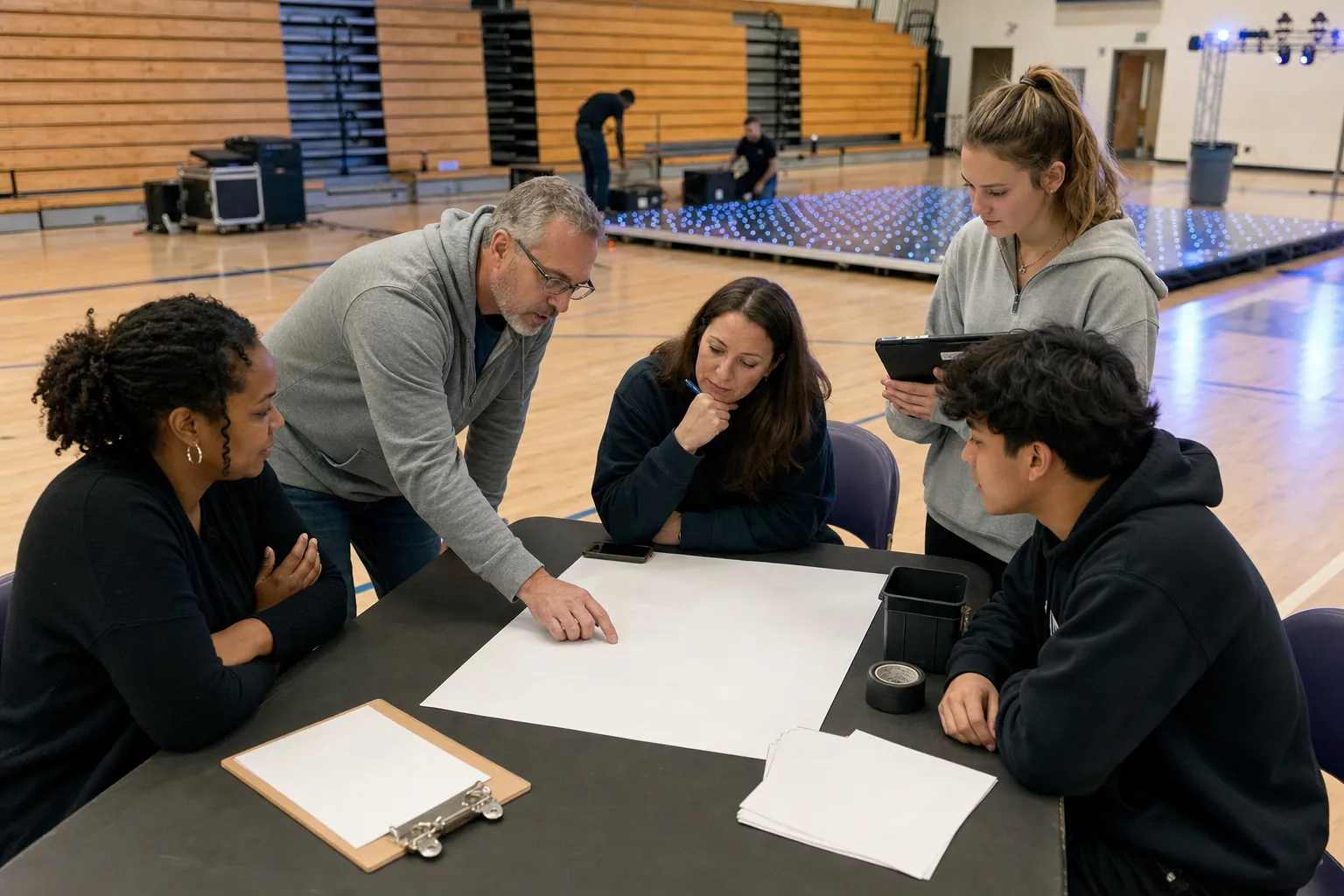
Keep a small student committee involved if one exists. They can help flag duplicate requests and explain which songs are likely to land well, while adults keep responsibility for suitability and event flow. That balance is much stronger than handing off the playlist completely or ignoring student input altogether.

Build the night in energy blocks
A good school dance playlist has shape. It does not need a rigid minute-by-minute script, but it should have a welcoming start, a few lift moments, breathing room, and a clear ending. Think in blocks instead of a single ranked list. If one song does not land, the music lead can move to the next block without losing the room.
- Arrival: Start with recognizable, upbeat music that lets students enter, find friends, and take in the room without pressure.
- First lift: Use one familiar singalong or participatory song after the room has had time to warm up.
- Open dance: Mix current requests, proven crowd songs, and different tempos so the floor does not feel repetitive.
- Reset: Let the energy ease briefly for photos, water, snacks, or a simple announcement, then build again.
- Close: Save a broadly recognizable final song or short closing sequence that gives the event a shared finish.
For a short dance, this structure may happen only once. For a longer formal, repeat the middle sequence with a different type of lift. The goal is not to manipulate students into dancing nonstop. It is to keep a visible rhythm that makes it easy to rejoin after someone has taken a break.
Choose group moments that do not put anyone on the spot
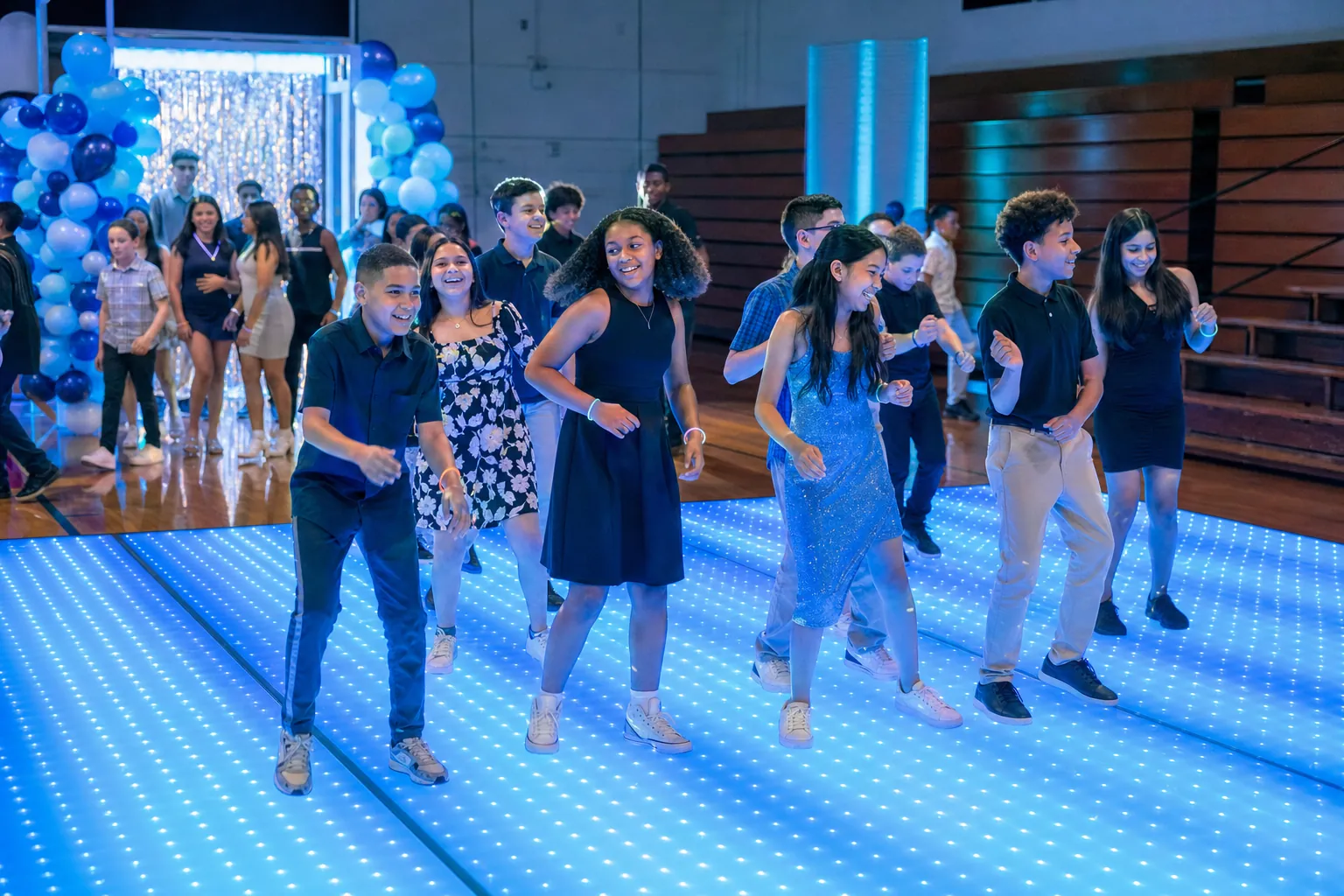
The most useful songs for a school dance often have a built-in invitation. A familiar line dance, a simple call-and-response, a big chorus, or a song with an easy group cue gives students a reason to move together without a volunteer calling people out one by one. Schedule these moments after the room has filled a little, not while guests are still checking in.
Keep the activity brief. A three- or four-minute group moment is usually enough to reset attention and bring people back to the floor. Then return to open music. A long contest or repeated announcements can make the music feel like a program students have to sit through rather than a social event they chose to attend.
If the event needs more participation ideas, pair the playlist with the school dance activities guide. Music works best when the room also has a photo point, a comfortable social edge, and a clear dance area. Students then have more than one way to be part of the night.

Give the DJ or music lead a practical brief
Even a great song list needs someone who understands the event plan. Share the school’s approved-request process, the must-play and do-not-play categories, planned announcements, and the rough times for arrival, any group moment, and closing. Give that person one contact who can make quick decisions if a request or situation needs an answer.
Do not over-script the set. The music lead needs room to read the crowd. If students are still taking photos and talking, it may be better to extend the welcoming set before the first lift. If the room is already energetic, move sooner to an approved high-recognition track. Good event music responds to the room while staying inside the plan.
Assign a volunteer to the request process, too. Students should know whether to use a form, speak to a designated adult, or leave requests at a table. They should not crowd the DJ booth. A clear request path keeps the booth focused on sound and lets the night feel organized even when the floor is busy.
Use the floor and room layout to support the music
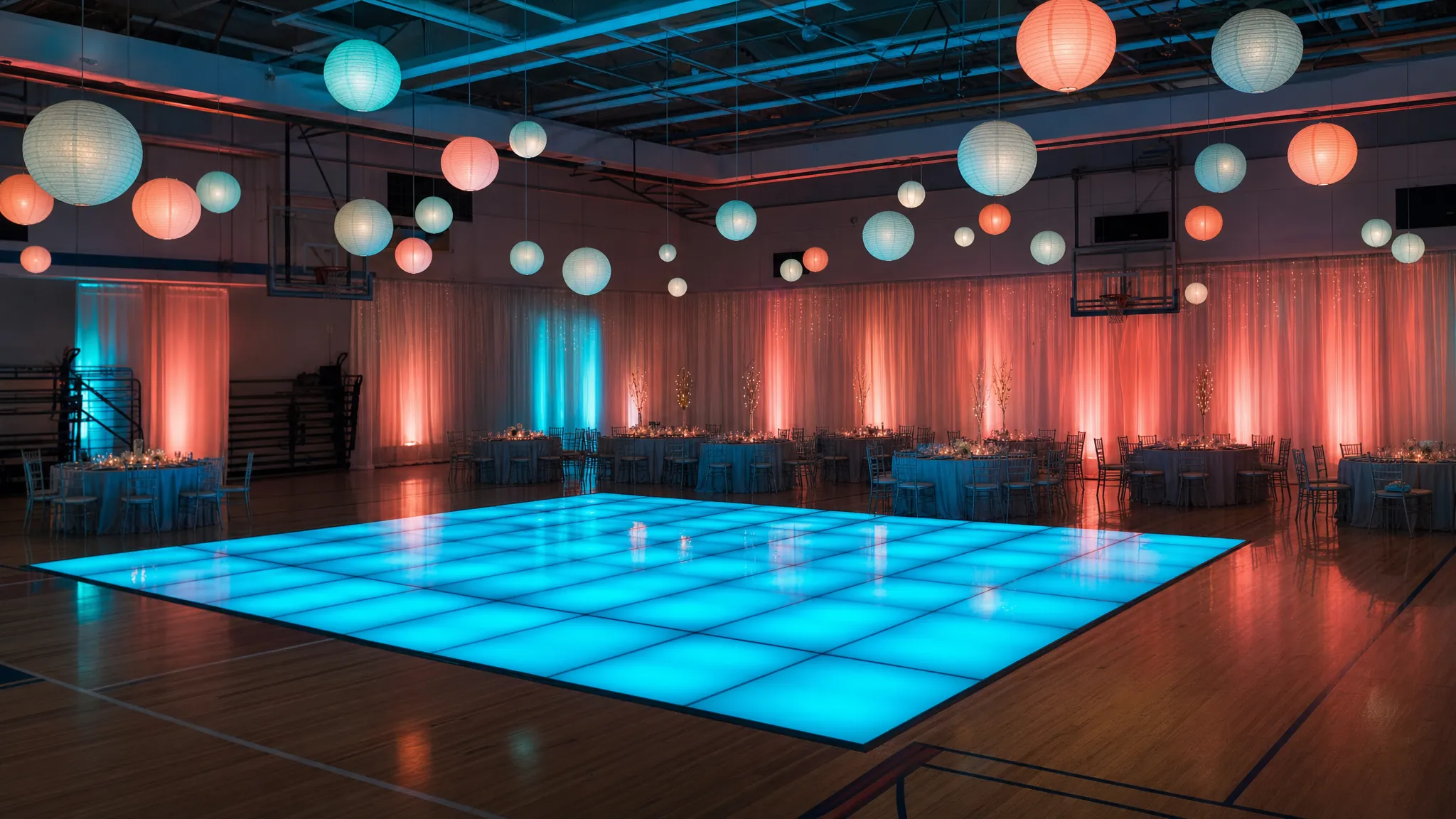
Music has a visual side. Students are more likely to join an area that looks active, open, and easy to enter. Keep the dance floor visible from the entrance, allow room around its edge for people to watch or step in, and place speakers so the sound reaches the room without making every conversation impossible. A photo area and seating zone give guests a place to reset without leaving the energy completely.
The school dance planning checklist can help organize those decisions before setup starts. When the music, lighting, entry, and floor placement all point students toward the same center, the room feels more confident from the first song.

Plan for the moments when the room is not dancing
Every school dance has a few lulls. A group leaves for snacks, a favorite song ends, a teacher needs an announcement, or students simply need a break. These moments are not a sign that the event is failing. They are part of a normal social night. The music plan should make them feel intentional instead of awkward.
Keep a short bank of dependable songs for transitions. These are not necessarily the biggest tracks of the night. They are songs with an easy beat, a familiar chorus, or a friendly tone that let students talk, take photos, or return to the floor without feeling as if they have missed the main event. The music lead can use them to bridge from arrival into open dancing, from a snack break back to a group moment, or from one style of request into another.
Adults can help most by resisting the urge to announce every dip in energy. Students notice when an event feels tense or over-managed. Give the room a minute to breathe, keep the photo area and social edge active, and let the next planned lift do its job. A calmer response creates the feeling that the event has room for every kind of student, not only the people who dance from the first song to the last.
Match the playlist to the age group and event type
Middle-school dances usually benefit from a tighter, more conservative request screen and more visible group cues. Guests may arrive in small friend groups and take longer to test the floor, so familiar, easy-to-join songs matter. High-school homecoming and formal events can allow more variety, but they still need the same clear standards and pacing. A more mature crowd does not make a confusing or unscreened playlist easier to manage.
For a themed event, let the music support the theme without turning the whole night into a soundtrack gimmick. A winter formal might open with polished, atmospheric selections before moving into requests. A glow night can use a few high-energy moments that suit the lighting. The school dance themes guide can help the committee decide how much of the event should be themed, and where students simply need familiar songs that make the room feel social.
Prom and homecoming also tend to include more photos, arrivals, and pauses for friends to gather. Build that into the plan. Start the event with music that supports arrival and pictures, then save the most broadly appealing shared songs for after the room has filled. A playlist works when it respects what students are actually doing at each stage of the night, not when it tries to rush them past those social moments.
A simple playlist-planning checklist
- Confirm the school’s music rules and the adult with final approval.
- Collect student requests early and state that all requests will be screened.
- Preview the exact edit of every song that makes the final list.
- Plan music in welcoming, lift, open-dance, reset, and closing blocks.
- Prepare more approved songs than the event will need.
- Give the DJ or music lead the event timeline, announcements, and one decision-maker.
- Keep requests away from the booth with one clear collection method.
Make the music part of a night students remember
Led Dance Floors Dallas helps organizers create a visible center for school events, with a floor size and setup plan that fit the venue, guest count, access needs, and schedule. Once the date and room are confirmed, use the availability request to share the details needed for a thoughtful setup. The music brings people toward the floor. A clear, welcoming room gives them a reason to stay there.
Frequently asked questions
How do you choose school dance songs?
Start with the school's music rules, then ask students for requests early enough to screen them. Build the final playlist in energy blocks, with familiar group songs and a reserve of approved options instead of promising every request.
How many songs do you need for a school dance?
The right number depends on the event length and how often the music lead will take requests or make announcements. Prepare more approved songs than the event can use, so there is always a clean, appropriate next choice if the room changes direction.
Should students be allowed to request songs?
Yes, as long as the request process is clear and the school or music lead keeps final approval. Requests help adults understand what students recognize, but they should never override school standards or the event's tone.
What makes a song appropriate for a school dance?
A suitable song fits the age group and the school's expectations for both language and subject matter. Preview the exact version that will play. A clean label is helpful, but it is not a substitute for listening to the actual edit.