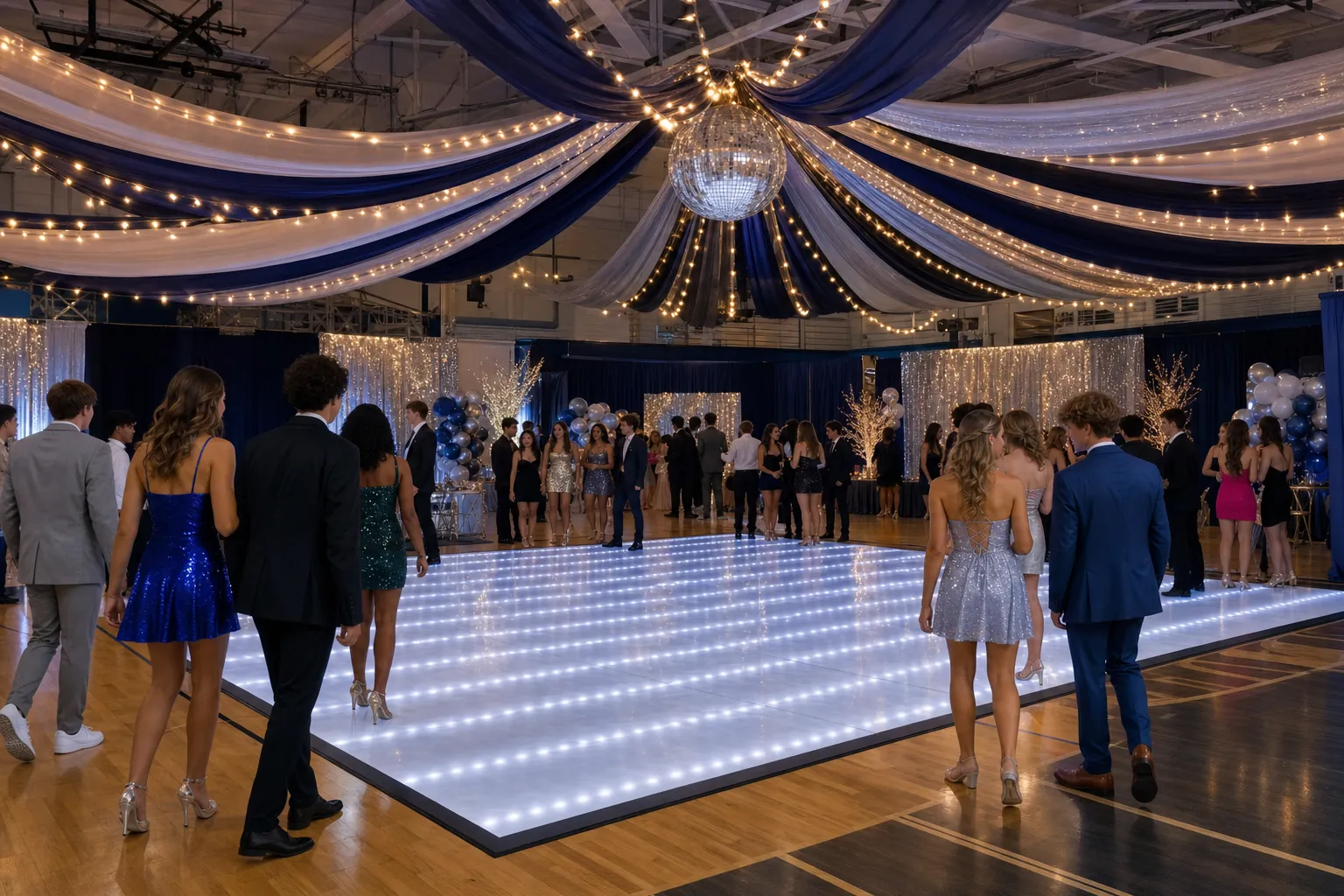
Homecoming is more than a dance. It is one of the few school events that asks the whole campus to picture itself together: the team after the game, the student who has been planning an outfit for weeks, the friends who mostly want photos, and the people who will not step onto a dance floor until the room feels right. The best homecoming dance ideas make space for all of them.
That does not require turning a school gym into a ballroom. It requires a few deliberate decisions: a strong first impression, one visual direction, a layout that lets students move easily, a few shared moments, and a centerpiece that gives the night energy. Start with those decisions, then add details that support them.
1. Choose one feeling for the night
Homecoming can drift into a random mix of colors, props, and activities when the planning group starts buying decor before deciding what the event should feel like. Pick a simple direction that students can understand immediately. Midnight blue and silver, black tie lights, city glow, garden lights, or a school-color celebration can all work. The point is not to make every detail match. The point is to give the room one recognizable mood.
Use that choice as a filter. The invitation, entrance, photo spot, lighting, table linens, and dance floor should look like they belong to the same event. A compact palette with one metallic accent usually feels more polished than five theme colors fighting for attention. The school dance themes guide can help a planning team turn a broad idea into choices that will still work in a gym or multipurpose room.
Keep the theme inclusive. A student should be able to participate without buying a costume or understanding an inside joke. The best homecoming themes reward people who want to dress up, while still making the night feel open to everyone who simply wants to be there with friends.
2. Make the entrance feel organized and special
The entrance sets the social temperature. Students notice immediately whether they are walking into a long line, a dark doorway, or a room that feels ready for them. Put check-in where it is visible, quick, and easy to staff. Give the entry a little atmosphere before guests reach the main room: a balloon treatment, drape, uplighting, or a simple photo-ready moment can signal that homecoming has started.
Separate the jobs at the door. One group handles tickets or names, another welcomes students and directs them inside, and one adult keeps the route clear. That prevents the line from becoming the first event of the night. The federal SchoolSafety.gov planning resources are a useful reminder to keep entries, exits, and adult support visible when a familiar school room is being used in a new way.
Tell students what happens next as they enter. Let them see the photo spot, hear the music, and spot the dance floor without having to ask where to go. A good arrival gives groups a natural first move, whether that is taking a photo, finding friends, or watching the room for a minute before they join in.

3. Give the room clear destinations
A homecoming dance should not force every student into the same experience. Some guests will be ready to dance. Others want photos, food, a place to talk, or a few minutes to settle in. When the room offers obvious destinations, it feels fuller, more comfortable, and easier to supervise.
- Dance zone: Place it where it can be seen from the entrance, with enough open edge space for students to watch before they join.
- Photo zone: Put the backdrop away from check-in and refreshments so a short line does not block the room.
- Refreshment zone: Keep water and snacks convenient but outside the main dance path, with trash and volunteer support nearby.
- Social zone: Add a few tables, benches, or lounge seats where friends can talk without leaving the event entirely.
Walk the plan before the event. Follow the route a student will take from the entrance to the dance floor, photo area, refreshments, restrooms, and exit. Check for tight turns, cables, tables that create dead ends, and spots where a crowd could block a path. The school dance planning checklist is useful for assigning who owns those practical details before setup day.
Clear zones are not just about appearances. They help adults see what is happening without hovering over students, and they make it easier for guests to find their people. A room with a few well-planned destinations feels more social because students can move between them naturally.

4. Build energy in stages
Do not judge the event by the first ten minutes. Students often arrive in small groups, take photos, look for friends, and wait to see how the room feels. Start with recognizable music that has energy but does not demand an immediate crowd on the floor. Open the photo area and refreshments at the same time so early guests have something to do besides stand at the edge.
Once the room has warmed up, use a shared moment to make joining easier. A familiar group song, a quick class-year shout-out, a court announcement, or a short photo challenge can pull people toward the center without making anyone feel singled out. Keep it brief, then return to open music and let the energy grow on its own.
Student input makes a real difference here. A small group of students can help flag songs that will land, identify what feels out of date, and suggest the kind of photo moment people will actually use. Adults still set school-appropriate boundaries, but the night should not feel like it was planned entirely from outside the student experience. The Centers for Disease Control and Prevention's school connectedness guidance makes the larger point clearly: students are more likely to engage when they feel they belong and have a meaningful voice.
Keep the program light enough that students still have room to make the night their own. A packed schedule can make homecoming feel more like an assembly than a social event. Choose two or three moments that deserve everyone’s attention, then let the rest of the evening breathe. The court presentation, a group song, and a final track can all be memorable because they give the room a shared beat, not because they take over every minute.
5. Treat the photo moment like part of the event
Homecoming photos are not an add-on. They are one of the main reasons students arrive early, stay with their group, and share the event afterward. A well-placed backdrop gives friends something to do before the dance floor fills, and it keeps phones from clustering in inconvenient spots around the room.
Keep the backdrop simple enough that people, not props, are the focus. A fabric wall, school colors, metallic fringe, balloons, or a lighted frame can carry the theme without requiring a giant build. Give it enough light for phone photos, leave a small queue area, and place it where students can step in and out without walking through a food line or the middle of a dance crowd.
Plan for the photos that happen away from the backdrop too. The entrance, a bright dance floor, and a few clean sightlines across the room make it easier for students and families to capture the night as it happens. Keep any professional photographer or yearbook team aware of the schedule, especially for the court presentation and the first busy stretch on the dance floor. The school dance decorations guide explains how repeating a few visual cues can make those candid photos feel more finished without decorating every inch of the gym.
6. Let the dance floor give the room a center
A bright dance floor does more than provide a place to dance. It gives a large school room a visible center, creates a natural background for group photos, and makes the first step onto the floor feel like joining the event rather than walking into an empty space. That matters at homecoming, where different groups may arrive with very different comfort levels.
Choose the floor size from the room plan, not from a number pulled out of the air. Think about the guest estimate, DJ or music setup, seating, photo area, exit routes, and the open space students need around the floor. A floor should have room to breathe. When tables and refreshment lines press directly against it, students have fewer ways to approach or step away comfortably.
It also needs to fit the event-day plan. Confirm when the venue is accessible, where equipment enters, how the floor will sit on the surface, and when other vendors need the room. The floor size guide is a practical starting point, and the Dallas LED dance floor rental page explains the details that help the team match a setup to the venue.

7. Finish with a simple homecoming checklist
Before doors open, the team should be able to answer these questions:
- Can students understand the event mood as soon as they arrive?
- Does check-in move quickly, with separate roles for welcome, tickets, and supervision?
- Are the dance floor, photo zone, refreshments, social space, restrooms, and exits easy to find?
- Do the room layout and decor leave clear walking paths when the gym fills?
- Does the music plan start gently, build naturally, and include a few short shared moments?
- Has the school confirmed its supervision, behavior, and safety expectations with the event team?
- Are the venue access time, floor size, and setup sequence confirmed before other equipment fills the room?
Give the people running the event a simple shared schedule with setup, doors open, court presentation, activities, closing, and pickup. It does not need to be a binder. It needs to tell each person where to be and who can make a call when the plan changes. The National PTA's event-planning guidance is helpful for thinking through the practical side of a school event, including volunteers, venue needs, and the event plan. A final walk-through with the people running check-in, music, refreshments, and supervision will uncover more than a long email chain ever will.
Bring the plan together
Homecoming feels memorable when students can walk in, immediately understand the mood, find their friends, and choose how they want to take part. The goal is not to fill the room with more activities than anyone can use. It is to make the few important parts work together: a welcoming entrance, a clear room plan, a photo moment, music that builds, and a dance floor that gives the night somewhere to gather.
Led Dance Floors Dallas helps schools plan a floor that fits the room, guest count, access window, and event flow. When the date and venue are set, use the availability request to start the conversation with the details that matter.
Frequently asked questions
What makes a homecoming dance memorable?
A memorable homecoming dance has a clear visual idea, an easy arrival, a room that gives students more than one way to participate, and a strong center of energy. The details do not need to be elaborate. They need to work together so the night feels intentional from the entrance through the last song.
How do you decorate a homecoming dance on a budget?
Choose one color pair or theme, then repeat it at the entrance, photo area, dance floor, and a few high-visibility points around the room. Lights, drape, balloons, and one photo backdrop can make a larger impact than small decorations scattered across every wall.
What should be included at a high school homecoming dance?
Start with check-in, a visible dance area, music, a photo moment, refreshments, clear walking paths, and adult support. Add only the activities that fit the students, the venue, and the supervision plan. A simple room with obvious destinations will feel better than a packed room with competing stations.
When should you book a dance floor for homecoming?
Book once the school has confirmed the date, venue, guest estimate, and access time. Those details make it possible to choose a floor size, map out the room, and confirm setup before tables, decorations, and other equipment lock the layout in place.
Related posts
SCHOOL EVENT PLANNING
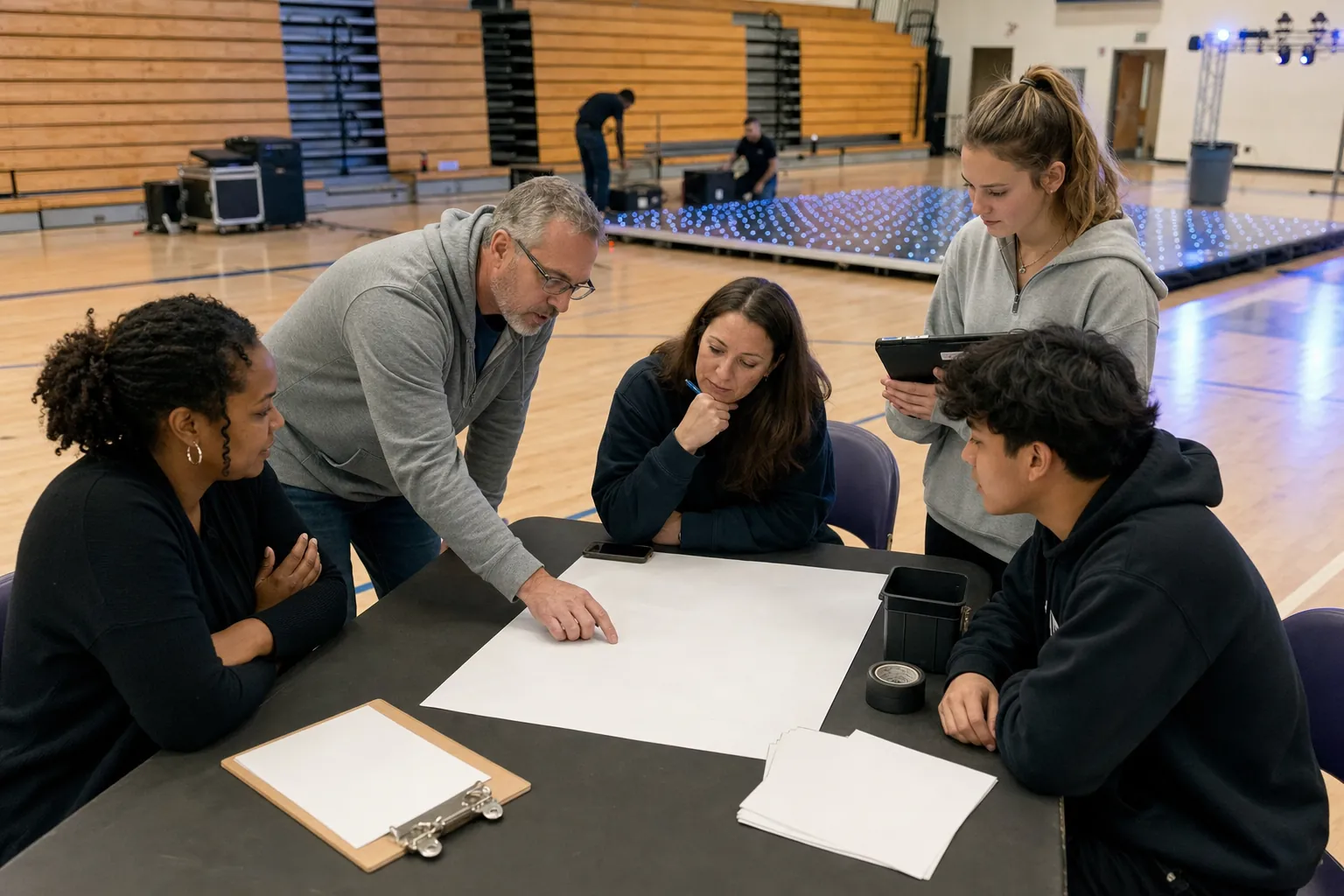
How to Plan a School Dance: A Practical Checklist
Build a clear plan for the venue, budget, room flow, volunteers, program, and a dance night students want to join.
Read the guide ↗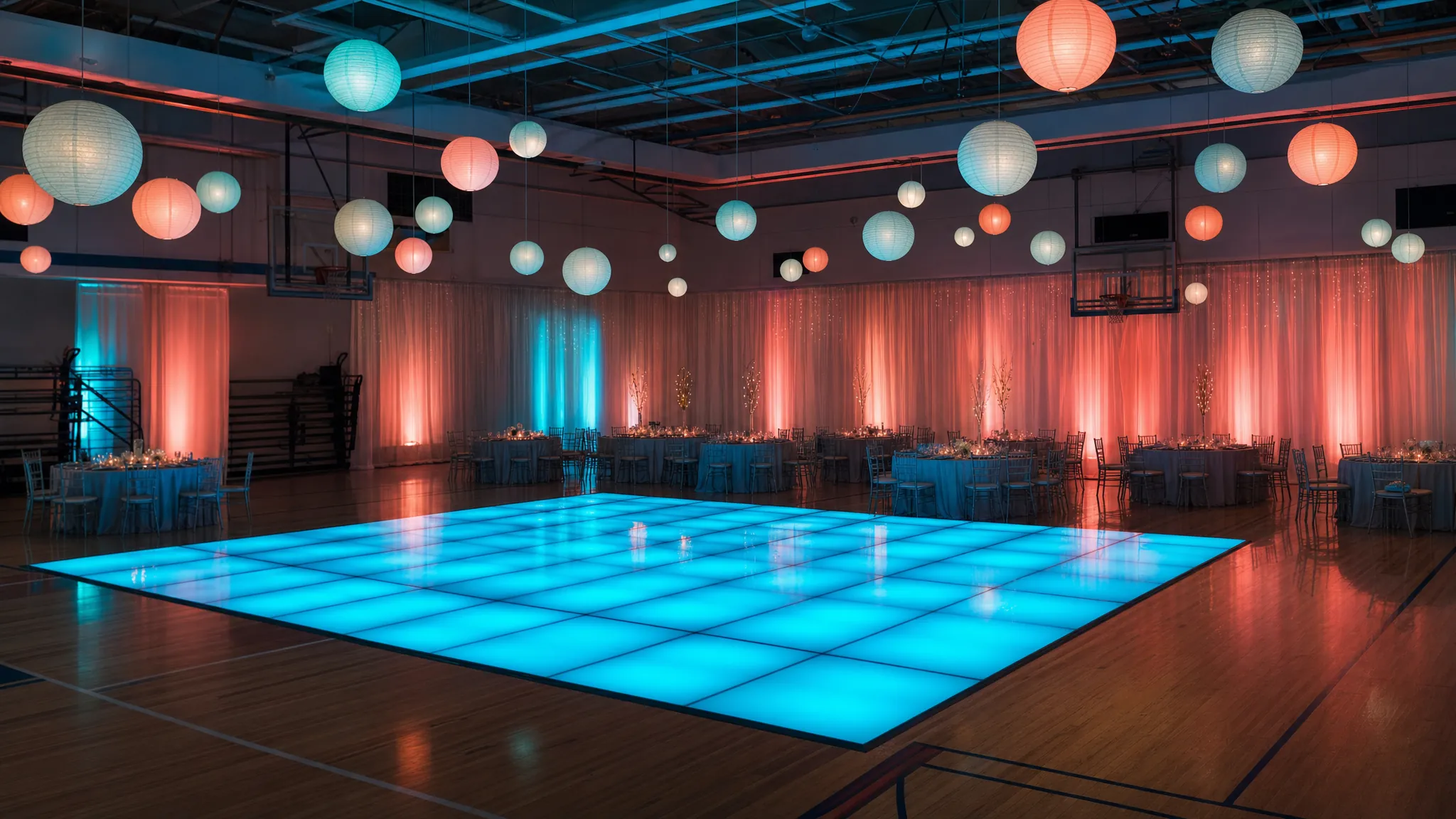
SCHOOL EVENT PLANNING
12 School Dance Themes Students Will Want to Attend
Choose a school dance theme, make the room work around it, and plan a welcoming night students want to join.
Read the guide ↗