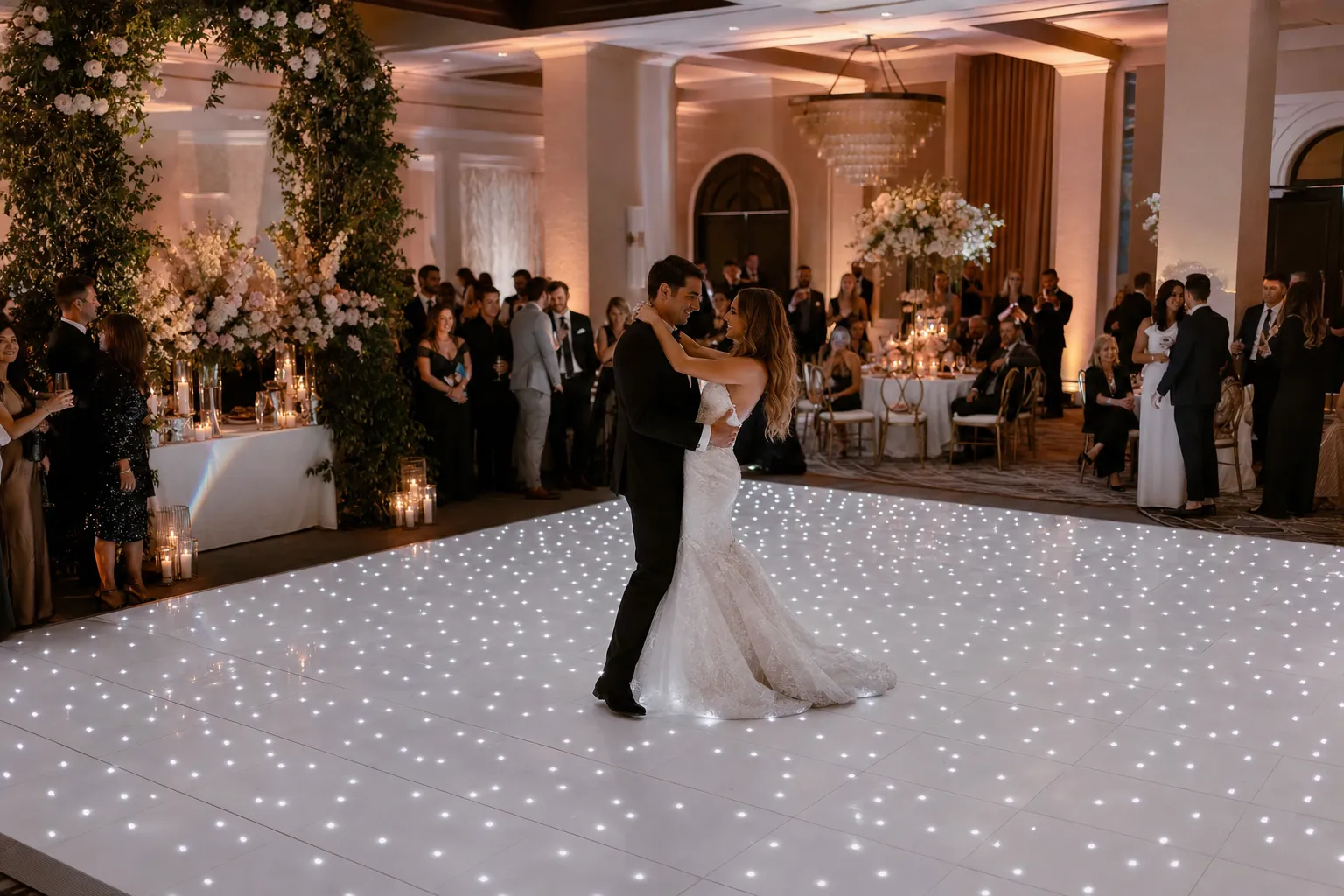
Wedding dance floor ideas are easy to collect and harder to turn into a room that works. A beautiful floor can still feel disconnected when it is squeezed between tables, placed too far from the music, or left without a clear path from the entrance. The better question is not simply what color or pattern to choose. It is how the floor should help the reception feel from the first dance through the final song.
Start with the experience you want guests to have. Do you want a polished ballroom moment, a bright all-night party, or a warm reception where the floor comes alive after dinner? Once that is clear, the decisions around placement, size, lighting, seating, and photos become much easier to make. Use these ideas to create a floor that feels like it belongs to the whole celebration.
1. Let the dance floor be the room's center of gravity
The floor should give guests an immediate answer to a simple question: where is the celebration happening? In many receptions, the best location is close to the DJ or band and within view of the couple's table, while still leaving room for guests to enter and circulate. When the floor is easy to see, it becomes an invitation instead of a destination people have to hunt down.
A useful layout starts with the guest journey. Think through arrival, cocktail hour, seating, dinner service, toasts, the first dance, open dancing, late-night snacks, and the exit. If the floor forces guests to cut across a service route or blocks the natural path to the bar, it will feel less comfortable once the room fills. Keep the busiest paths around the outside, not through the middle of the party.
The Dallas wedding dance floor rental guide can help you start that conversation around the reception timeline and room plan. Bring a venue layout to the first discussion whenever possible. It is the fastest way to move from a saved inspiration photo to a setup that will actually work in the space you booked.
2. Choose one visual direction, then let it carry the room
A dance floor does not have to compete with every detail in the room. In fact, it usually lands better when it has one clear job. A white LED floor can give a classic ballroom a clean, luminous center. A brighter light setting can make a more modern reception feel energetic after dinner. A quieter look can keep the floor present for the first dance and let the floral design, candles, or ceiling treatment do the rest.
Look for connection rather than an exact match. The floor can pick up the warmth of candlelight, the crispness of white linens, a floral color, or the clean geometry of the room. Avoid adding a second visual idea just because it looks good in isolation. A monogram, pattern, prop installation, or heavy surround only belongs there if it still leaves room for people to dance and photograph the moment comfortably.
Before finalizing a look, ask what it will look like when the floor is empty, during the first dance, and when a crowd is on it. The strongest choice works in all three stages.
3. Size the floor for the guests who will actually use it
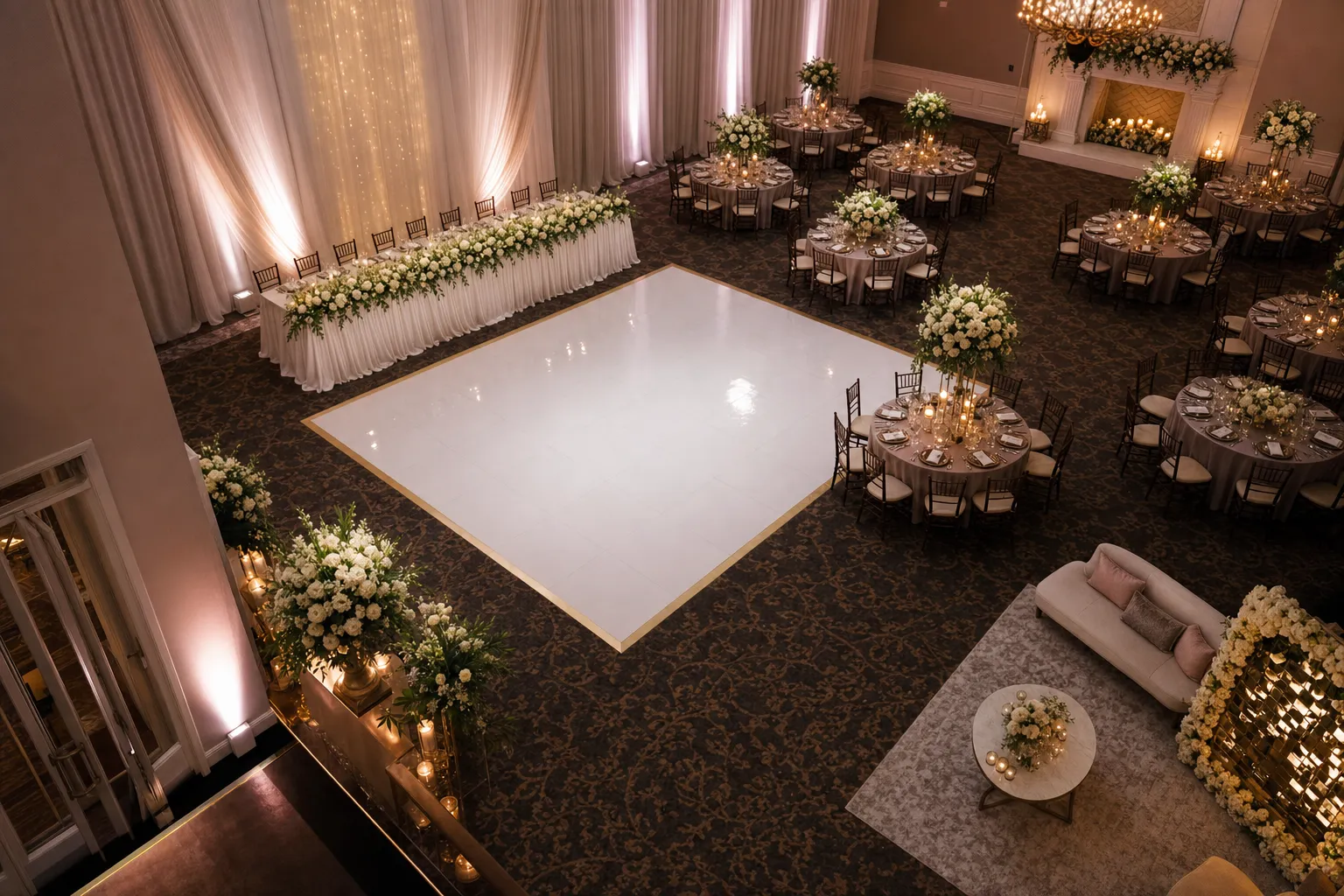
Too small, and the floor feels crowded just as the room gains momentum. Too large, and it can feel like an empty stage during the quieter parts of the evening. The right balance depends on the room footprint, the guest count, and the kind of reception you are planning. A high-energy crowd may want a larger share of the room for dancing. A dinner-forward reception may need more space for tables, service, and conversation.
Do not size the floor in a vacuum. Place it on the venue plan, then look at what remains around every edge. Can guests get from their tables to the dance area without weaving through a line? Is there room for a photographer to work without becoming part of the dance? Can servers move through the room without crossing the first-dance view? Those are the details that make a floor feel generous rather than squeezed in.
The site's floor size options are a helpful starting point for comparing footprints. Once you know the venue and rough attendance, a specific setup can be recommended around the space instead of choosing a size by guesswork alone.
4. Protect the first dance view
The first dance is often the quietest moment the floor needs to hold. That is what makes a clear view so valuable. Arrange the room so guests can gather around the edge without standing in a traffic lane, and give the photographer and videographer a clean angle before chairs, cocktail tables, or decorative pieces close it off.
Think about the background, too. The most memorable first-dance photos usually show people, light, and room depth, not a blank service wall or a crowded buffet behind the couple. If your reception has a dramatic head table, floral installation, fireplace, window wall, or stage, see whether it can sit naturally within the view of the floor. The goal is not a perfect set. It is a frame that feels alive once friends and family gather around it.
Run through the first-dance setup during the final venue walk-through. Stand where the couple will stand, then look outward from the floor. You will quickly spot sightlines that need more breathing room.
5. Use lighting to change the mood, not to overwhelm it
Good reception lighting has a rhythm. Early in the evening, guests need enough light to find their tables, see dinner, and settle in. Once the music begins, the floor can take more of the visual energy. A lighted floor gives the room an easy transition without requiring the rest of the venue to become dark or difficult to navigate.
Keep the difference between atmosphere and visibility in mind. The dance floor can be the bright point of the room, while routes to the bar, restrooms, exits, and tables remain easy to use. Ask the venue about what lighting stays on, how the DJ or band lighting will work, and where power or access points sit before locking in the final plan. Those practical details protect the feeling of the room after the sun goes down.
For a floor-led party, let the DJ or band know when the lighting should shift for entrances, the first dance, parent dances, and the open-dance set. The change will feel intentional rather than like a switch flipped at random.
6. Build the photo moment around movement
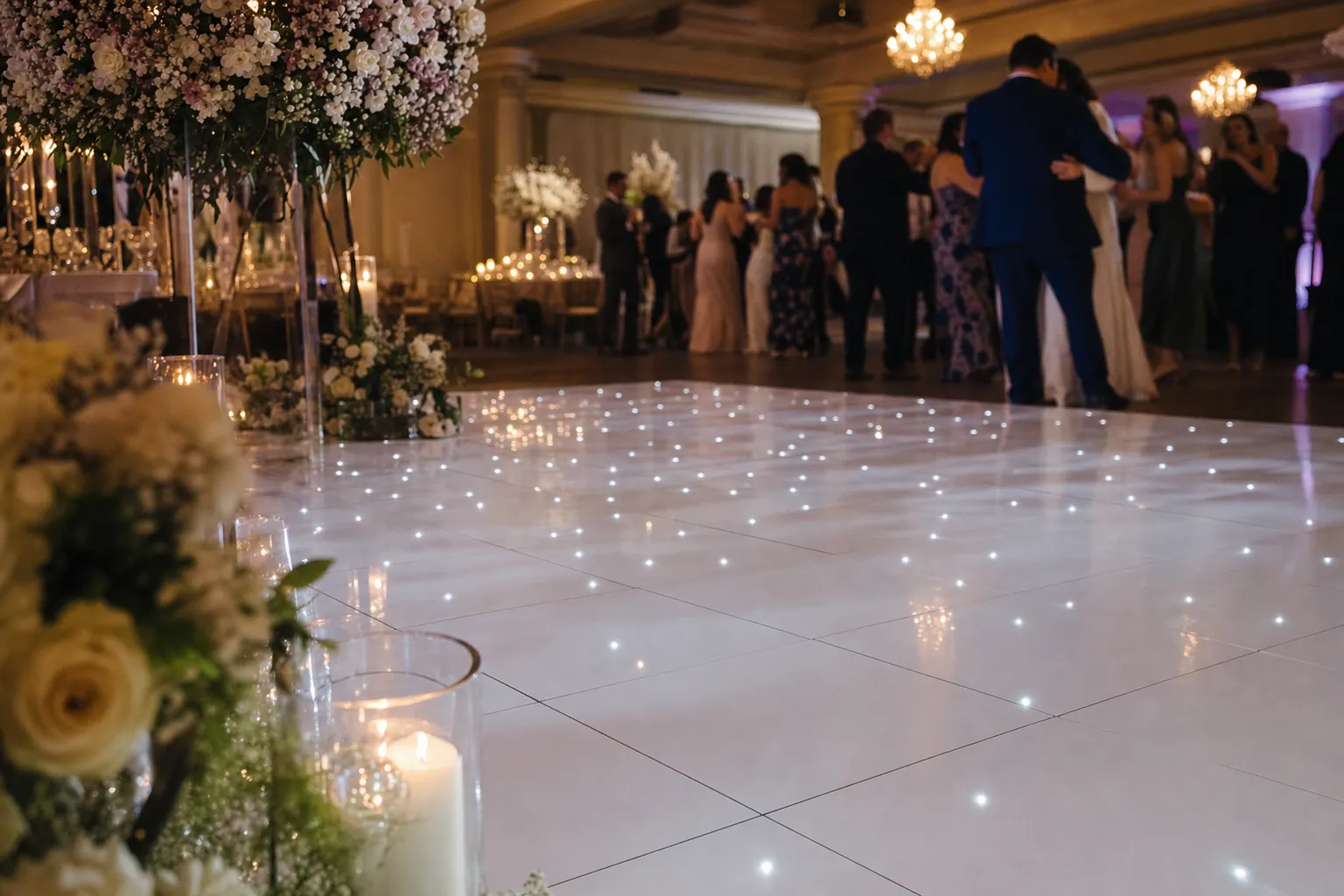
A wedding floor earns its place in photos because people move through it. Keep the surrounding design simple enough that groups can gather, dancers can spread out, and the couple can still be seen. The floor itself is already a strong visual. It does not need an oversized prop in every corner to read as special.
Choose one nearby photo moment that supports the floor instead of competing with it. That might be a floral backdrop, a clean wall with candlelight, or a lounge area just beyond the dance zone. Give it its own small pocket of space so a photo line does not block the people who are ready to dance. This also gives guests who are not dancing an easy way to stay part of the energy.
Photographs look most natural when the couple can move from dinner to dancing to a group photo without having to cross the entire room. Keep those moments within the same visual neighborhood, and the reception will feel more connected in person and in the gallery afterward.
7. Plan for the floor at the beginning and the end of the night
The floor has a different job at each point in the reception. During the first dance, it creates focus. During open dancing, it needs to make room for a full crowd. During the final songs, it becomes the place where everyone comes together one last time. A layout that only looks good for one of those moments misses the real opportunity.
Ask your music team to build a clear transition from dinner into dancing. A few early songs that invite people out, one recognizable group moment, and room for guests to find their own rhythm usually work better than a packed schedule of announcements. The floor will feel more welcoming when people can enter and leave it naturally instead of feeling like they need permission to participate.
For the ending, leave enough open space around the edge for a final circle, a private last dance, or a farewell photo. A strong close is easier when the room has not been crowded by temporary tables, gifts, or equipment throughout the night.
8. Invite guests in without forcing the moment
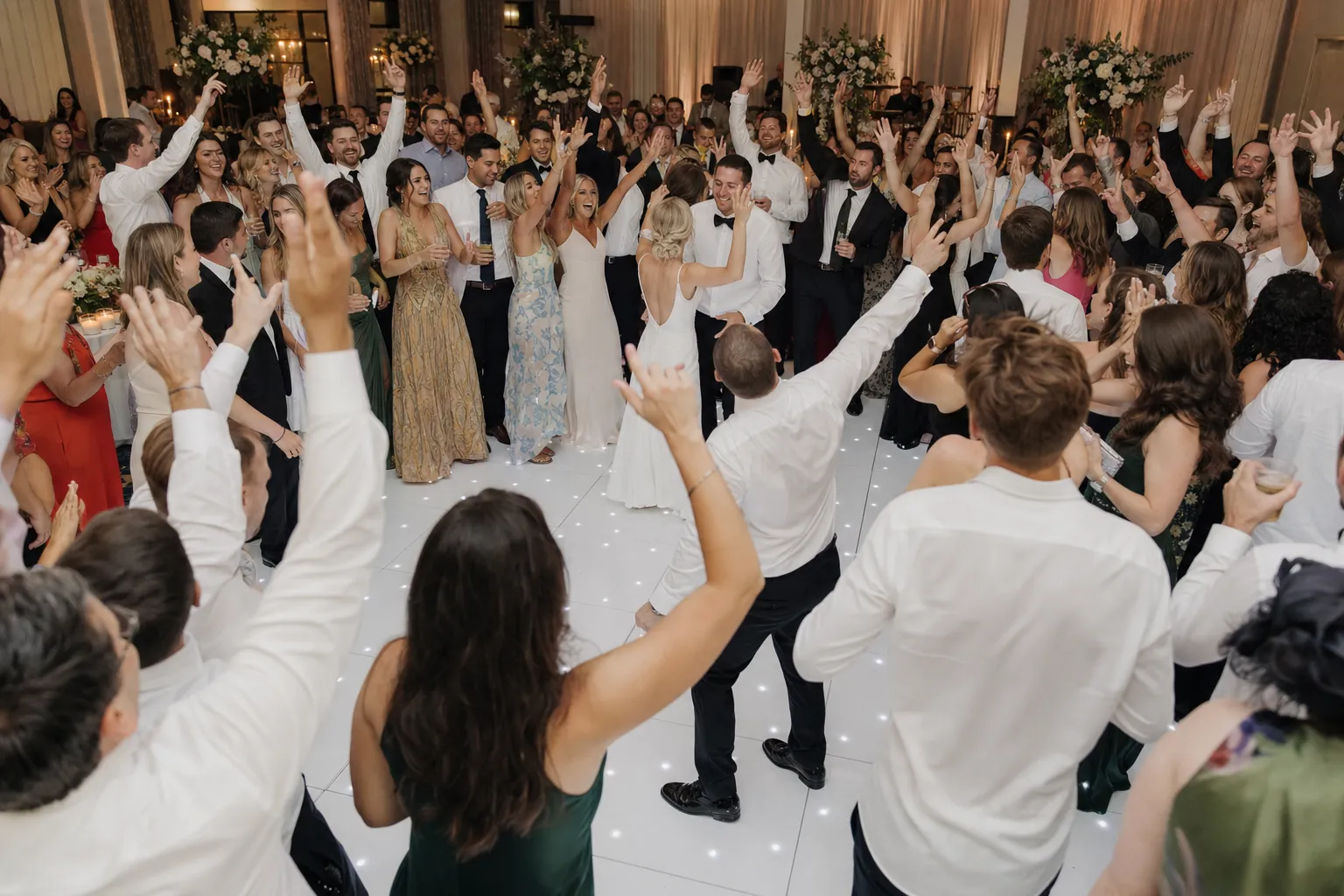
A beautiful dance floor is most effective when it gives guests an easy reason to join. The first few songs set the tone, so make them familiar, upbeat, and welcoming to more than the people who always dance first. A couple's first dance can flow into a parent dance, a wedding-party song, or a short invitation for everyone to come closer. The aim is to remove the awkward gap between watching and participating.
Once the floor has a few people on it, protect that momentum. Keep announcements brief, do not pull guests away for a long sequence of formalities, and make sure the music team understands where the floor fits into the full reception schedule. A dedicated dance space makes that easier because it keeps the energy visible even for guests who are talking, taking photos, or waiting for the next song.
Think about who might need a softer entry point. A nearby lounge, a photo moment, and open paths around the floor let guests stay connected without needing to dance all night. That flexibility makes the room feel more social, and it means the floor can grow naturally from a first-dance backdrop into the busiest part of the reception.
9. Make the rental plan fit the venue, not the other way around
The best wedding dance floor ideas are grounded in the room you actually have. Access times, loading paths, floor condition, event schedule, and guest count all influence the setup. That is why the venue plan is more useful than a single inspiration image. It gives the rental team the information needed to recommend a footprint that supports the celebration instead of introducing a last-minute compromise.
Led Dance Floors Dallas helps couples and planners match the floor to the reception's look, guest flow, and venue access. Review the dance floor rental cost guide for the factors that shape a quote, then use the availability request once the date, venue, and rough guest count are in place. The earlier the room is considered, the more freedom you keep for the rest of the reception design.
Wedding dance floor checklist
Before you commit to a setup, make sure these questions have clear answers:
- Where will the floor sit in relation to the entry, tables, bar, music, and head table?
- Can guests gather around the first dance without blocking a route?
- Does the floor size leave room for dancing and comfortable movement around it?
- What will the floor look like early in the night, during dancing, and at the end?
- Which lighting is part of the floor moment, and which lighting must remain for navigation?
- Where will guests take photos without creating a line through the dance area?
- What does the venue need from the delivery, setup, and pickup plan?
When the answers work together, the floor becomes more than a rental item. It becomes the place that makes the reception feel like it has started.
Frequently asked questions
What kind of dance floor is best for a wedding?
The best wedding dance floor fits the room and the way guests will use it. Start with the guest count, the available floor area, and the visual mood of the reception, then choose a finish and lighting approach that supports those decisions.
Where should the dance floor go at a wedding reception?
Place the dance floor where guests can see it easily and reach it without crossing the entry, service path, or restrooms. It usually works best near the music and within sight of the head table, with food and seating arranged around the edges instead of through the middle.
How large should a wedding dance floor be?
The right size depends on the room and the number of people likely to dance at once. Leave enough space for guests to join comfortably while preserving clear paths to tables, bars, exits, and the photo area. Share the venue layout when requesting a quote so the setup can be matched to the room.
When should you book a wedding dance floor?
Book once the date, venue, and rough guest count are set. Those details allow the floor size, access plan, and setup timing to be confirmed before the rest of the reception layout becomes fixed.
Related posts
SCHOOL EVENT PLANNING
School Dance Themes: Ideas That Fill the Floor
Choose a school dance theme, make the room work around it, and plan a welcoming night students want to join.
Read the guide ↗
SCHOOL EVENT PLANNING
How to Plan a School Dance: A Practical Checklist
Build a clear plan for the venue, budget, room flow, volunteers, program, and a dance night students want to join.
Read the guide ↗