Prom decoration ideas can get big very quickly. A mood board fills with arches, lights, backdrops, fabric, balloons, centerpieces, and themed signs. The committee then walks into a gym or ballroom with a limited setup window and wonders where any of it should go. The practical answer is to design the guest experience first, then decorate the moments that make the biggest difference.
Guests remember how the room felt when they arrived, where they took pictures with friends, and where the energy built during the night. They do not need every wall covered. They need a clear visual direction and a room that is easy to use. This guide breaks that down into a few high-impact zones, with ideas that can suit an elegant ballroom, community venue, or school gym.
Start with a short visual plan
Before shopping, choose one mood and a palette of two main colors plus one accent. A midnight-blue, silver, and white plan could become a starlit night. Black, gold, and champagne can lean classic and formal. Garden green, cream, and soft pink can create a romantic direction. The goal is not to make every item match perfectly. It is to give every choice a filter, so the room reads as one event instead of several ideas competing for attention.
Next, list the spaces guests will actually see: the entrance, check-in, tables, photo area, dance space, refreshments, restrooms, and exits. Pick no more than three visual focal points. This approach echoes the practical emphasis in the National PTA event-planning guide, which asks organizers to coordinate the venue, safety, and volunteer roles before the event begins. A simple plan also gives volunteers a clearer setup job than a box of decorations with no room map.
1. Make the entrance feel like prom has begun
The entrance does not need to be expensive to feel special. A fabric frame, balloon cluster, lighting moment, or backdrop in the event colors can mark the shift from an ordinary school building to prom. Keep the main path open so students can move through check-in quickly. Decor works best around the edge of the route, where it frames the arrival instead of making a line harder to manage.
Choose one welcome moment that photographs well. It could be a pair of lighted columns, a draped arch, or a large backdrop with the theme colors. Then repeat a smaller version of that texture or color inside the room. That small repetition is what makes the entrance feel connected to the tables and dance area, rather than like a separate display.

2. Let lighting do more of the work
Lighting can change the perceived size and mood of a room faster than another table of props. Soft overhead points of light, a wash of color on a clean wall, or a brighter focal area around the dance floor can give a plain venue a clear atmosphere. Use the venue’s existing controls first, then add only what the access plan and staff approval support.
Keep practical lighting at check-in, food service, restrooms, and exits. The Department of Justice notes that accessible routes need to stay free of obstructions, including furniture and other temporary items. Read that as a useful event-planning rule: place decorative pieces so the paths people need remain simple to see and use. A dark, dramatic room can still be welcoming when the important routes are obvious.
3. Give photos a destination of their own
A photo area earns its place because it gives students an easy first activity and creates a natural pause away from the dance crowd. It does not need a large custom build. A clean backdrop, flattering lighting, a small amount of depth through fabric or balloons, and enough room for groups to stand together is usually enough.
Position the photo area near the social energy, but away from the entrance line and refreshment table. A photo queue should never cut across the route to the restrooms or the dance floor. Use the same palette as the entrance and tables, then let this one area carry the detail. The result looks intentional in phone photos and gives the room a visual moment without asking volunteers to decorate every square foot.

4. Use tables to repeat the theme, not compete with it
Tables are where the color plan can quietly tie the room together. Choose one repeated element, such as a runner, small centerpiece, low floral arrangement, metallic accent, or battery-lit detail. Keep centerpieces low enough that students can talk across the table and staff can still see through the room. One complete table design repeated consistently reads better than a different project at every table.
For a tight budget, put more of the spend into the entrance, photo spot, and dance area, then use simple table details to connect the palette. That gives guests a high-impact first impression without leaving the room looking unfinished once they sit down. It also makes cleanup kinder to the people who stay after the music stops.
5. Make the dance floor the visual center
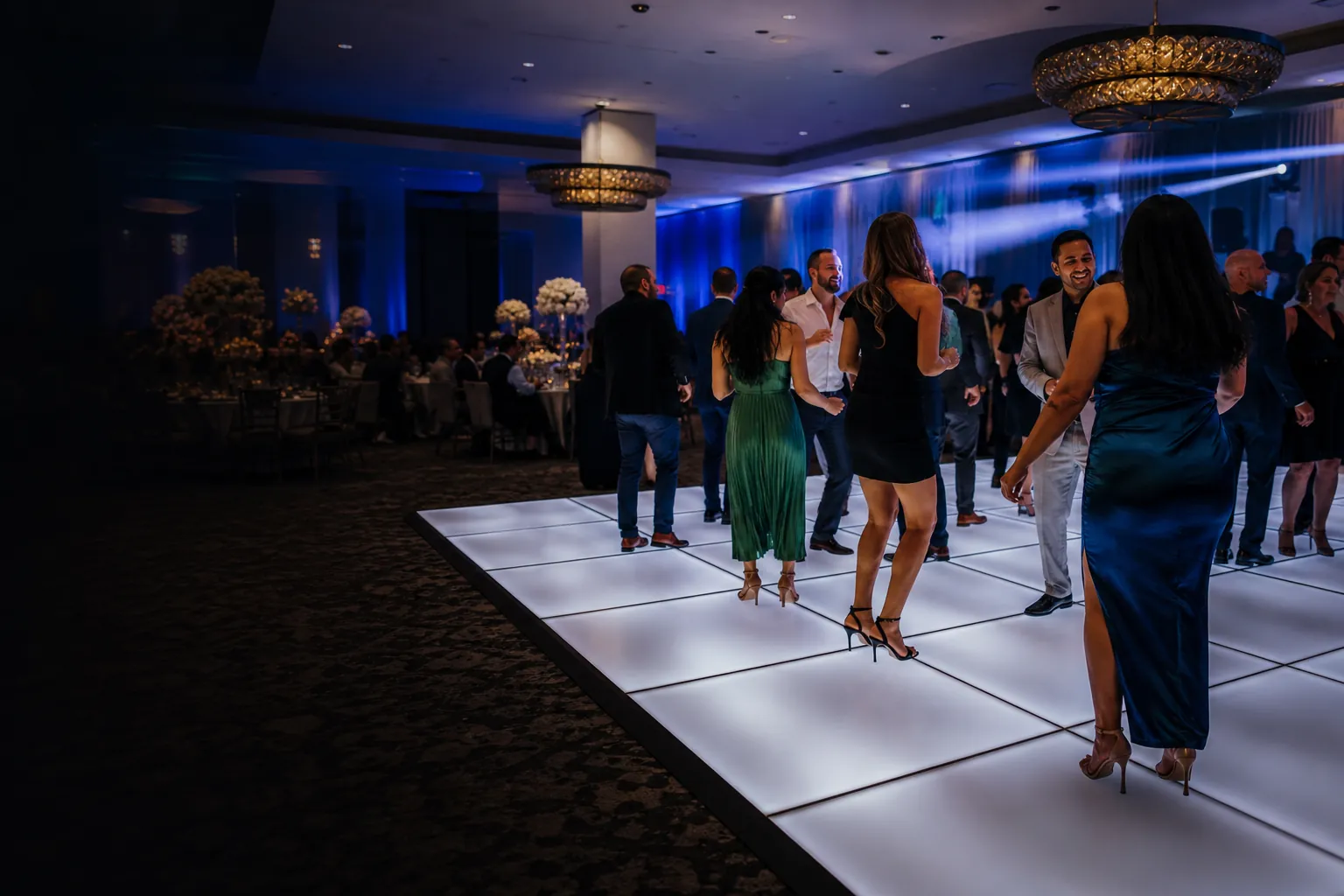
The dance floor is where the room becomes active. If it is hidden behind tables or pushed into an unlit corner, students can hesitate to join. Give it breathing room, a clear view from the entrance, and one or two details that make it feel like the center of the event. Lighting, a DJ backdrop, a ceiling treatment, or a bright LED floor can all create that pull.
Choose the floor location before the final table plan. Consider the DJ position, the edges where guests will gather, and the routes people need to use. The floor size guide can help shape the footprint early, while the prom theme ideas guide helps make that focal point fit the chosen direction. A visible center makes the rest of the room easier to organize around it.
6. Plan the room as connected zones
Prom looks better when every area has a clear job. It also runs more calmly. Guests should know where to check in, where to take photos, where to dance, and where to take a break without asking for directions. Decorations can reinforce those zones through light, color, and placement rather than relying on signs everywhere.
- Arrival zone: A clear check-in area with the first visual cue for the night.
- Photo zone: A dedicated backdrop with room for groups and a short line.
- Dance zone: A visible, open focal point with comfortable space around its edge.
- Table and social zone: A calmer place to sit, talk, and reset.
- Refreshment zone: Kept apart from the dance crowd so a queue does not cut through the room.
Walk the plan with venue staff before event day. The school’s own rules, emergency plan, and venue restrictions decide what can hang, what can plug in, and where it can go. A few minutes spent confirming that detail protects the look of the room and the flow of the night.

7. Decorate up, then keep the floor clear
Large rooms can swallow small details. If the venue allows it, use height with fabric, lanterns, light elements, or a limited ceiling treatment around the dance space. This changes the room’s scale while preserving the area students need to move through. Walls can support the same effect with a few focused panels or light washes rather than full coverage.
Do not treat the floor as leftover storage. Boxes, spare props, and decor waiting to be placed make a room feel unfinished and create avoidable obstacles. Assign someone to remove setup supplies before doors open, and give each major zone a volunteer who owns its final check. The school dance planning checklist is useful for dividing those last event-night responsibilities.
A practical prom decoration checklist
- One theme and a small color palette guide every major decoration choice.
- The entrance, photo area, and dance zone each have one clear focal moment.
- Check-in, exits, restrooms, refreshments, and accessible routes remain open and easy to use.
- Table pieces are low, repeatable, and easy to remove after the event.
- The dance floor is visible and has room for people to join, watch, and step away.
- Venue staff have approved the plan for hanging items, lighting, and power.
- Each setup zone has a volunteer lead and a cleanup assignment.
Bring the room together
The best prom decorations make students feel the event before they have even found their friends. They turn a familiar room into a place with its own energy, while keeping the night easy for students, chaperones, and volunteers to navigate. If a bright dance floor is part of the plan, Led Dance Floors Dallas can help match the setup to the date, venue, guest count, and room layout. Use the availability request once those basics are in place.
Frequently asked questions
How do you decorate for prom on a budget?
Choose two or three places that guests will notice most: the entrance, one photo area, and the dance floor or DJ backdrop. Repeat a small color palette there, then keep tables and walls simple. A few complete moments look more polished than small decorations spread across every surface.
What decorations make a prom look elegant?
A limited color palette, fabric or drape, thoughtful lighting, simple centerpieces, and one well-lit photo backdrop can make a prom feel formal. The key is to use the same visual direction at the entrance, tables, photo area, and dance space instead of mixing unrelated props.
Where should a prom photo area go?
Place it close enough to feel part of the event, but outside the paths for check-in, restrooms, refreshments, and the dance floor. It needs room for small groups to pose and a short line to form without stopping everyone else from moving.
How can a school gym look like prom?
Focus on the first view, the lighting, and the center of the room. An entrance treatment, a coordinated photo area, and a visible dance-floor focal point can transform a gym while leaving the essential routes open for students, staff, and vendors.
Related posts
PROM PLANNING
Prom Theme Ideas That Make the Night Feel Special
Choose a prom direction that fits the venue, then build the room around it.
Read the guide ↗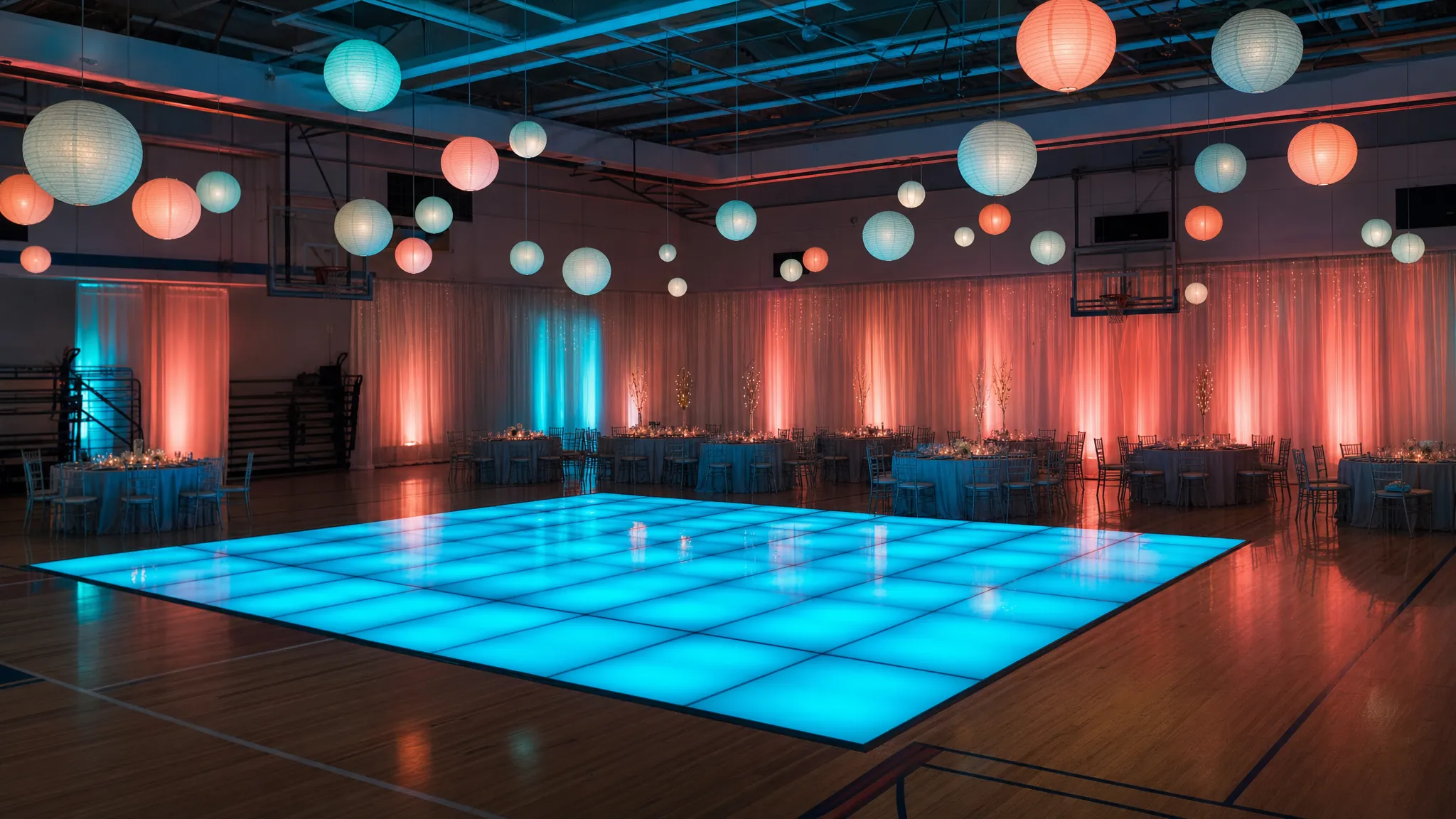
SCHOOL EVENT PLANNING
School Dance Themes: Ideas That Fill the Floor
Find a theme that creates a clear, welcoming direction for the whole event.
Read the guide ↗